


What Are the Top Types of Appliance Injection Parts?

What Are the Top Types of Appliance Injection Parts?

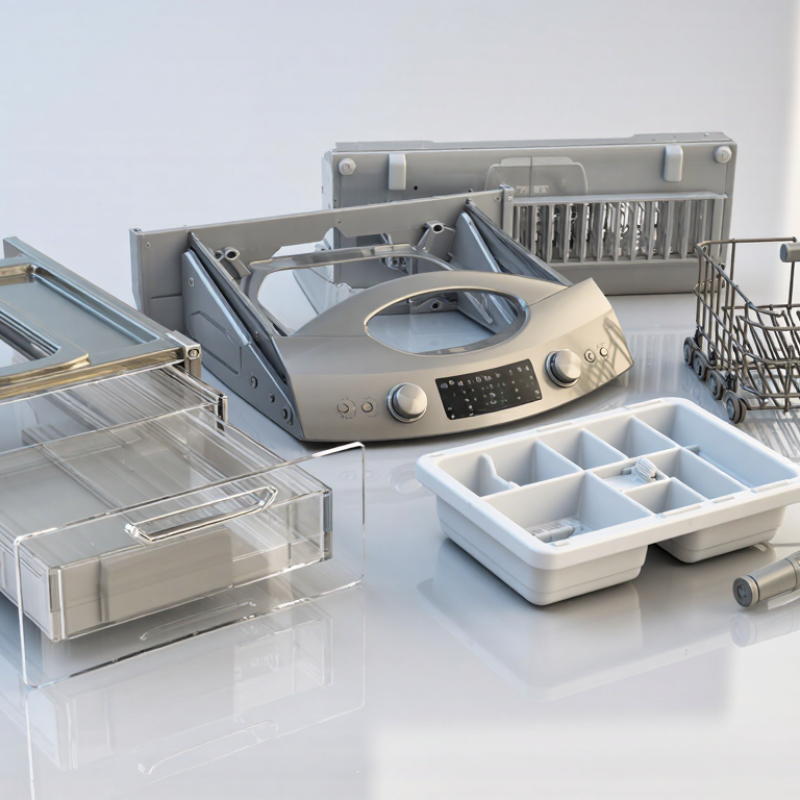
Appliance Injection Parts are the molded components that help household machines store, guide, protect, and control everyday functions. They range from refrigerator door bins and crisper drawers to washer detergent trays, dishwasher spray arms, and control-panel housings. Some are visible and easy to name. Others sit behind a panel, quietly directing airflow or shielding electrical components.

The top types are usually grouped by what they do, not simply by appliance. Interior storage parts need smooth surfaces and dependable fit. Housings and covers must protect sensitive components while allowing practical assembly and service. Handles, knobs, and buttons face repeated contact, so wear resistance and a comfortable grip matter. In damp or warm areas, material selection and dimensional stability become especially important. Small details count. A drawer that catches, or a clip that breaks during routine removal, can undermine the whole appliance experience.

This guide looks at common appliance injection-molded parts and the roles they serve across refrigerators, washing machines, dishwashers, and other products. It also considers how design, resin choice, and operating conditions shape performance. A part’s appearance alone tells little about its demands. Not always obvious. Similar-looking components may need different strength, temperature resistance, or chemical compatibility. Actual requirements depend on the appliance design and its intended use, so broad categories are a useful starting point—not a substitute for careful engineering review.
What Are the Top Types of Appliance Injection Parts?

Defining Injection-Molded Parts in Household Appliances

An injection-molded appliance part is a component shaped by forcing softened plastic into a closed, precision-made mold. The material cools, hardens, and takes the mold’s details, including ribs, holes, or snap-fit edges. That matters. Unlike a complete appliance, the molded part is one piece within a larger assembly, designed to guide, protect, support, or control another function.

Common examples include refrigerator shelf supports, washer detergent drawers, dishwasher spray-arm components, and control-panel buttons. A small clip may hold a wire in place, while a broad inner liner can help form a cleanable surface. Parts are often made from thermoplastics selected for stiffness, impact resistance, or contact with moisture and household cleaners. The right choice depends on location and use.

Designers must consider wall thickness, cooling, shrinkage, and the force needed to release each part from its mold. Poorly balanced thickness can leave sink marks or weaken a snap connection. Appearance alone can mislead. A molded part is not automatically strong just because it feels rigid; repeated heat, vibration, or detergent exposure may affect its performance. During inspection, dimensions and fit deserve attention alongside surface finish. Even then, real service conditions can reveal problems that a sample check misses.

How Materials and Molding Processes Shape Appliance Components

Appliance injection parts are shaped as much by material choice as by the mold itself. Polypropylene works well for refrigerator bins and washing-machine detergent drawers because it is light and resists household chemicals. ABS offers a firmer feel for control-panel housings, while glass-filled nylon can stiffen gears and brackets exposed to repeated loads. PlasticsEurope’s Plastics – the Fast Facts 2024 reports global plastics production of 413.8 million tonnes in 2023. That figure describes the wider materials landscape, not appliance use specifically. It reminds us that resin selection has consequences beyond one component. Small details matter.

Injection molding turns those choices into usable parts. Thin walls can reduce weight, but uneven cooling may cause warping or sink marks near thick ribs. Carefully placed gates help material fill corners; poorly placed ones can leave visible weld lines across a glossy panel. Mold temperature and packing pressure also affect dimensions, surface finish, and cycle time. These are practical trade-offs, not just settings on a machine. A design that looks clean in CAD may still need several mold trials. That limitation is easy to overlook. Recycled resin can reduce virgin-material demand, but color variation and inconsistent flow may require testing before it suits a visible or load-bearing component.

Major Types of Structural and Housing Parts

Structural and housing parts give an appliance its outer form and internal support. Covers, side panels, and rear shells protect wiring and mechanisms while allowing airflow and service access. A washer control bezel or dishwasher base panel may look simple, but it must fit nearby parts with consistent gaps. Small mismatches can cause rubbing, loose joints, or uneven seams.

Inside the housing, brackets, frames, and mounting plates hold motors, pumps, and electronic assemblies in position. Molded ribs can stiffen a broad panel without adding much material. Bosses provide locations for screws, while snap-fit features can speed assembly. That matters. Yet a rib placed poorly may create a sink mark on the visible surface, so designers often need to balance strength with appearance.

Material and geometry should reflect real operating conditions. A refrigerator liner faces repeated temperature changes; a laundry housing may experience vibration and splashes. Wall thickness, corner radii, and fastener locations all affect part performance. In practice, an early prototype can reveal a flexing panel or awkward assembly step that drawings missed. Not every first design gets it right, and that is worth examining before production.

Common Functional and Electrical Parts Made by Injection Molding

What Are the Top Types of Appliance Injection Parts?
Common Functional and Electrical Parts Made by Injection Molding

Injection-molded appliance parts often handle movement, support, or protection. Functional examples include knobs, drawer fronts, fan blades, pump housings, hinges, clips, and internal brackets. A molded rib can stiffen a thin panel without adding much material. Snap-fit tabs can also reduce separate fasteners. Small details matter: poorly placed gates may leave visible marks, while tight corners can concentrate stress. The part must fit the real assembly, not just the drawing.

Electrical parts include switch housings, connector bodies, terminal covers, wire guides, and insulating barriers. Their resin must suit operating heat, impact, moisture, and electrical requirements. PlasticsEurope’s Plastics – the Fast Facts 2024 reports 413.8 million tonnes of global plastics production in 2023. That figure covers all plastics uses, not appliance injection molding specifically, so it should not be treated as an appliance-market estimate. Still, it shows the scale of the material supply behind molded components. Test parts under realistic heat cycles and vibration. Small flaws can matter. A candid limitation: material data alone cannot predict how a finished part will perform in a specific appliance.

What Are the Top Types of Appliance Injection Parts? - Common Functional and Electrical Parts Made by Injection Molding

Part type Typical appliance use Common material options Main function Key design considerations
Control knobs and buttons Ovens, ranges, washing machines, and small kitchen appliances ABS, PC/ABS, or heat-resistant grades selected for the operating environment Provide a user-operated interface for selecting settings or activating controls Grip, clear markings, fit to the control shaft, surface finish, and exposure to heat or cleaning products
Switch and control housings Appliance control panels and internal switching assemblies PA, PBT, or other application-qualified insulating thermoplastics Enclose and position switch mechanisms and help isolate electrical components Dimensional accuracy, heat resistance, flame-performance requirements, and electrical insulation needs
Terminal block and connector housings Wiring connections in appliances such as dryers, dishwashers, and refrigerators Often PBT or PA grades selected for electrical and thermal requirements Support and separate conductive terminals; the molded housing itself is insulating Creepage and clearance distances, terminal retention, temperature rating, and applicable safety standards
Fan blades and impellers Cooling fans, ventilation systems, and water circulation assemblies PP, PA, or PBT, depending on load, temperature, and fluid exposure Move air or liquid within an appliance Balance, blade geometry, shaft fit, noise, chemical compatibility, and operating temperature
Pump and valve components Dishwasher, washing machine, and refrigerator fluid systems PP, POM, or PA, selected to suit the fluid, wear, and temperature conditions Guide, regulate, or transfer water and other appliance fluids Leak paths, dimensional stability, wear, chemical compatibility, and sealing-surface quality
Detergent and dispenser components Dishwashers and laundry appliances PP or ABS, depending on chemical exposure and part requirements Store, direct, or release detergent and rinse-aid products Chemical resistance, fluid drainage, moving-part clearance, and resistance to cracking
Handles, bezels, and trim pieces Doors, drawers, control panels, and exterior appliance surfaces ABS, PC/ABS, or PP, according to strength and appearance needs Provide grip, cover edges, and finish the appliance exterior Attachment strength, impact resistance, appearance, color consistency, and repeated-use durability
Filter frames and grilles Air inlets, exhaust paths, and removable appliance filters PP, ABS, or PA, depending on airflow, impact, and heat requirements Hold filter media in place or protect ventilation openings Open area, rigidity, snap-fit retention, cleanability, and resistance to vibration

Material choices are application-dependent. Final selection should account for operating temperature, electrical safety, chemical exposure, mechanical loads, and applicable regulations.

How Appliance Design Determines the Right Injection-Molded Parts

How appliance design determines the right injection-molded parts starts with use conditions, not appearance. A refrigerator door liner needs broad, thin walls and stable dimensions, while a dishwasher spray arm must resist heat, water, and repeated pressure.

Small details matter. Ribs can stiffen a panel without adding much material, but poorly placed ribs may cause sink marks on its visible face. Hinge covers and control knobs need close-fitting features that still assemble reliably after molding.

Material choice follows the same logic. Parts near heaters need stronger heat resistance; handles and feet may need impact strength or a softer touch. The mold must also reflect production realities: draft angles help release parts, and gate placement affects flow, weld lines, and surface quality.

Grand View Research valued the global injection-molded plastics market at about $330 billion in 2023, illustrating the scale of this manufacturing method. That figure is broad, not appliance-specific. A glossy finish may look excellent on a sample, yet reveal scratches after months of wiping. Designers can overlook that. Testing parts under real cleaning, loading, and temperature cycles helps expose such weaknesses before tooling is finalized.