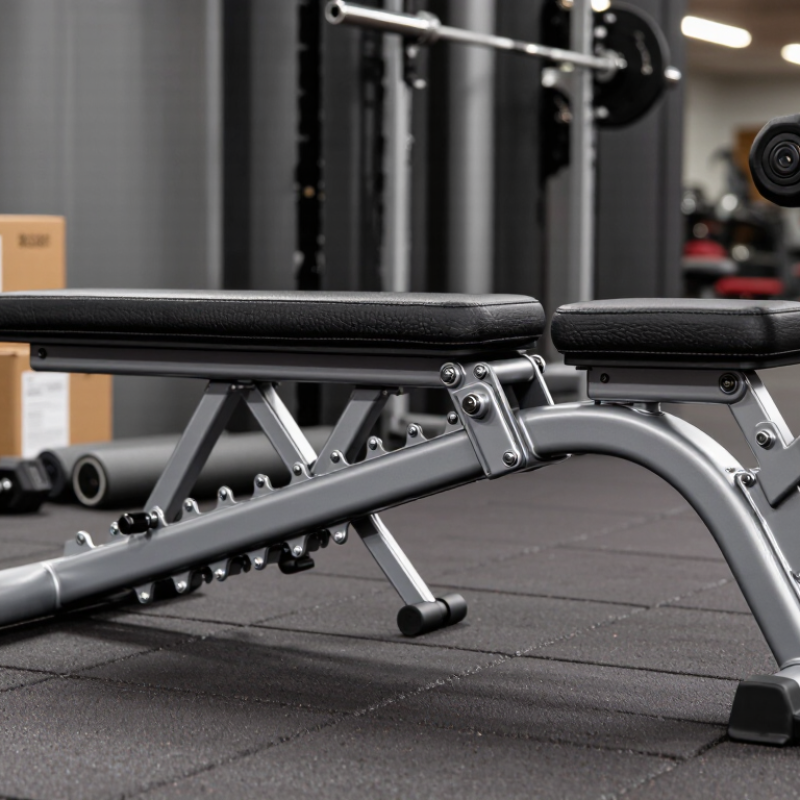
10 Exercise Bench Buying Tips for Global Buyers?

10 Exercise Bench Buying Tips for Global Buyers?

Buying an Exercise Bench for international use involves more than comparing prices and product photos. Global buyers must evaluate stability, adjustability, materials, user comfort, and supplier reliability. A bench may look strong online, yet feel unstable when its frame flexes during a heavy press. Small details matter.

This guide presents ten practical buying tips for distributors, gyms, retailers, and home fitness brands. It explains how to review steel thickness, weld quality, pad density, hinge design, weight capacity, and adjustment positions. It also considers packaging, shipping dimensions, assembly instructions, spare parts, and after-sales support. Experienced buyers should request test reports, factory images, sample units, and clear inspection records before placing larger orders. A reliable supplier should answer technical questions directly, not hide behind attractive marketing language.

Fit differs across markets. Taller users may need a longer back pad, while compact gyms may prioritize foldable storage. Local product requirements, labeling expectations, and customer preferences can also affect the final decision. No checklist is perfect. Even experienced teams can overlook a loose bolt, confusing manual, or damaged carton. That is why a sample inspection and realistic user trial remain valuable. The strongest purchasing decision balances safety, durability, comfort, total landed cost, and long-term service. A low unit price means little when returns, repairs, and customer complaints quickly reduce profit.

10 Exercise Bench Buying Tips for Global Buyers?

Define Training Goals, User Profiles, and Intended Bench Use

Before comparing an exercise bench, define the training goal clearly. A bench for heavy barbell pressing needs a rigid frame, stable feet, and dependable weight capacity. A compact bench for dumbbell workouts may need easy folding and simple storage. These are different purchasing decisions.

User profiles matter just as much. A tall athlete may need a longer back pad, while beginners often benefit from straightforward adjustments. In a shared gym, users may change settings dozens of times daily. Clear adjustment points, strong locking pins, and washable upholstery become practical priorities. Small details matter.

Intended use also changes the specification. Home users may train three times weekly, while fitness facilities may expect constant use. Measure the training area, including clearance around the bench. Check the bench height, pad width, incline positions, transport wheels, and documented load ratings. Ask for inspection records and material details from the supplier. Local safety requirements should guide the final purchase.

I once assumed a heavier bench was automatically better. That assumption was wrong. Some heavy frames were awkward to move and poorly suited to small rooms. A useful test is simple: adjust the bench, lie down, and check whether your shoulders stay supported. It is not perfect, but it reveals problems that product photos hide.

Compare Bench Types, Adjustability, Dimensions, and Space Requirements

Global buyers should match bench type to training goals, not catalog photographs.

A flat bench suits presses, rows, and step-ups with minimal adjustment points. An adjustable bench supports incline and decline work, but hinges can reduce stability. A rack-compatible bench needs accurate height and leg clearance.

The ACSM’s 2024 Worldwide Survey continues to identify traditional strength training as a major fitness trend, supporting demand for versatile equipment. Still, popularity does not prove suitability.

Measure the user, rack, plates, and storage zone.

A practical commercial bench often measures 120–140 centimeters long and 25–32 centimeters wide. Check pad thickness, seat angle, backrest positions, adjustment pins, and the gap between pads.

Small gaps can catch clothing or skin. Allow roughly 60–90 centimeters around the bench for loading and safe movement, then test the layout with a loaded bar.

That space may feel excessive until a user misses a rerack.

Review the supplier’s static-load test method, warranty terms, replacement-part access, and corrosion resistance. EN 957-2 covers safety requirements for strength-training equipment, while local certification rules may differ.

WHO recommends muscle-strengthening activities on at least two days weekly, so repeated commercial use deserves stronger frames and service planning.

I once underestimated storage depth; the bench fit the room but blocked a walkway. Recheck folded dimensions, shipping packaging, and floor protection. Bigger is not always better.

Evaluate Frame Materials, Weight Capacity, Stability, and Safety Features

When buying an exercise bench internationally, inspect the frame before judging its appearance. Steel usually offers dependable strength, while aluminum may reduce weight but needs careful engineering. Check welds for even lines, without cracks, gaps, or rough grinding marks. Ask for the net bench weight and tested weight capacity. Include the user, barbell, dumbbells, and added movement force. A 300-kilogram rating means little without a stated testing method. Request laboratory reports or technical documents when available.

Stability depends on more than a wide base. Place the bench on a hard floor and check for rocking at every contact point. Rubber feet should grip without leaving excessive residue. Look for reinforced joints, strong adjustment pins, and locking parts that engage fully. The backrest should remain firm during pressing, not shift under one shoulder. Padding must support the spine without feeling soft or collapsing. Sharp edges are unacceptable. Small details matter.

Safety features deserve practical testing. Try each angle adjustment several times, including the steepest position. A pin that feels loose today may become dangerous after repeated use. I once overlooked a slightly uneven foot during inspection; it became obvious when heavier loads were added. That mistake changed my checklist. Buyers should also examine bolt access, assembly instructions, corrosion protection, and replacement-part availability. Export packaging should protect adjustment mechanisms from impact and moisture. Local safety requirements can differ, so verify applicable documentation before ordering. No checklist is perfect. A careful hands-on check still catches problems that product photos hide.

Review Comfort, Maintenance Needs, Certifications, and Product Quality

For global buyers, an exercise bench should feel stable before it looks attractive. ACSM’s 2025 Worldwide Fitness Trends survey placed traditional strength training among the top five trends. That demand makes comfort and build quality commercially important. Test the back pad in flat and inclined positions. Check whether shoulders remain supported without pressing against hard edges. Fit changes everything.

Foam should recover quickly after firm pressure. Vinyl needs sealed seams and a surface that tolerates sweat, disinfectant, and repeated wiping. Ask for abrasion, load, and fatigue-test results, not only a glossy product sheet. ISO 20957-1 specifies general safety requirements and test methods for stationary training equipment. Applicable ASTM fitness-equipment specifications can provide another useful reference. Ask for evidence. Confirm the laboratory, test date, model number, and certificate scope.

Maintenance is often underestimated by overseas purchasers. Inspect pivot points, adjustment pins, welds, and fasteners before approving a shipment. Replacement pads and hardware should have clear part numbers and realistic lead times. A bench that needs special tools for routine tightening may create avoidable service costs. The Global Wellness Institute reported a $6.3 trillion wellness economy in 2023, with growth projected toward $9 trillion by 2028. Quality expectations will rise with that market. Still, no checklist catches every problem. A sample can pass inspection and feel awkward during real workouts, so invite trainers to test it under loaded, repeated adjustments.

10 Exercise Bench Buying Tips for Global Buyers? - Review Comfort, Maintenance Needs, Certifications, and Product Quality
No. Buying Tip What to Check Practical Buyer Benchmark Maintenance and User Comfort Quality and Compliance Evidence
1 Confirm the Intended Use Identify whether the bench is designed for home training, light commercial use, or frequent commercial use. Check the intended exercise types, including pressing, dumbbell work, abdominal exercises, and rack-compatible training. Choose a bench whose stated user and equipment capacity exceeds the planned routine. For commercial environments, request evidence of repeated-use testing rather than relying only on a visual inspection. A clearly defined use category reduces premature wear and helps users select an appropriate level of padding, adjustment, and frame strength. Request the technical specification sheet, test scope, warranty terms, and instructions showing the permitted exercises and operating conditions.
2 Check the Total Load Rating Review the maximum combined load, which normally includes the user’s body weight plus weights being lifted. Verify whether the rating applies to a flat, incline, or decline position. Do not compare load figures unless they use the same definition. Ask for separate limits for the user, the bench, attachments, and any rack or spotter component. A suitable safety margin helps reduce frame fatigue, excessive movement, and adjustment-pin stress during dynamic exercises. Look for documented static-load and durability-test results, test dates, sample identification, and a clear explanation of the test method.
3 Evaluate Stability and Footprint Inspect the base width, support-point arrangement, rubber feet, frame geometry, and resistance to rocking during pressing or repositioning. Compare the assembled length, width, height, folded dimensions, and product weight with the available training and storage area. Confirm that all contact feet sit evenly on the intended floor surface. Wide, level contact points generally improve stability. Replace worn or hardened rubber feet to prevent slipping and floor damage. Request assembly drawings, dimensional tolerances, anti-slip-foot specifications, and stability-test records where available.
4 Review Adjustment Quality Examine the backrest and seat adjustment mechanism, hinge design, locking pins, ladder positions, and the ease of changing angles without tools. Adjustment points should lock positively with no excessive play. Confirm the supported angle range, minimum and maximum positions, and whether the bench remains stable at each position. Keep hinges and locking interfaces free from dust and inspect them regularly for deformation, loose hardware, or incomplete engagement. Ask for adjustment-cycle testing, pin shear or retention information, replacement-part availability, and clear user instructions.
5 Prioritize Comfort and Ergonomics Assess pad firmness, surface texture, shoulder clearance, seat-to-backrest transition, edge shape, and support across the user’s back and hips. Request the pad length, width, thickness, density, and angle dimensions. The upholstery should support stable positioning without excessive sinking or sliding. Use a wipeable, non-absorbent cover with sealed or well-finished seams. Avoid harsh solvents that can damage vinyl or synthetic leather. Ask for upholstery material specifications, abrasion or tear testing when available, flame-performance information where required, and chemical-resistance guidance.
6 Inspect Frame and Weld Quality Check tube consistency, weld continuity, sharp edges, holes, fasteners, surface preparation, and signs of distortion or incomplete coating. Prefer clean, continuous welds with no visible cracks, major undercutting, exposed sharp edges, or excessive spatter. Confirm the steel grade and tube dimensions stated in the specification. Keep the frame dry, remove sweat promptly, and inspect welds and fasteners for corrosion or loosening, especially in humid or coastal locations. Request material declarations, coating specifications, welding quality procedures, inspection records, and corrosion-resistance test results when relevant to the market.
7 Verify Corrosion and Finish Durability Review the coating system, surface preparation, exposed metal areas, fastener finish, and resistance to sweat, cleaning products, humidity, and transport abrasion. For high-use or humid locations, ask whether the finish has been evaluated using a recognized corrosion-test method such as neutral salt spray. Test duration should be stated with the result and failure criteria. Use a mild detergent and soft cloth. Do not allow moisture to remain around joints, bolt heads, adjustment holes, or damaged coating. Request coating thickness information, salt-spray or equivalent test reports, batch traceability, and documented touch-up procedures.
8 Check Applicable Certifications and Standards Determine which rules apply in the destination market and whether the product is classified as stationary training equipment, strength-training equipment, or another equipment category. Ask whether the bench has been assessed against applicable parts of the EN ISO 20957 series or equivalent national standards. Requirements may differ by product type, intended use, and market. Standards compliance should support safe instructions, warning labels, stability, strength, adjustment, and pinch-point control; it does not replace routine inspection. Request the certificate or declaration, issuing body, standard edition, product model or family covered, test laboratory, and validity details. Avoid accepting an undated logo alone as proof.
9 Assess Safety Details Inspect pinch points, exposed threads, sharp corners, moving joints, transport handles, wheels, end caps, and areas where fingers or clothing could become trapped. All locking devices should be easy to identify and fully engage. Safety labels should be durable, legible, and supplied in the languages required for the destination market. Train users to verify adjustment locks before loading the bench. Establish a routine inspection schedule for pins, hinges, bolts, feet, upholstery, and frame damage. Request the risk assessment, user manual, warning-label artwork, assembly instructions, and records showing corrective action for identified safety issues.
10 Compare Serviceability and Product Consistency Review spare parts, packaging, assembly time, instruction quality, repair procedures, batch control, and the supplier’s ability to maintain consistent dimensions and materials. Prioritize replaceable upholstery, feet, pins, bolts, wheels, and adjustment components. Request a parts list with part numbers, lead times, minimum order quantities, and expected service life where available. A modular design can reduce downtime and disposal costs. Keep an inspection log and retain the manual, batch number, and purchase records for future service. Ask for pre-shipment inspection criteria, production batch records, final inspection reports, packaging-drop test information, and a written warranty with exclusions clearly stated.
Buyer note: Load capacities, dimensions, test methods, certification requirements, and warranty conditions vary by product design and destination market. Always verify the exact model, intended-use category, applicable local regulations, and supporting documentation before placing a purchase order.

Assess Suppliers, Pricing, Packaging, Shipping, Warranty, and Support

Tip 1: Check factory experience with commercial exercise equipment, not only catalog size. Request production photos, inspection records, and two recent buyer references. Tip 2: Verify material specifications, load testing, and electrical certificates before comparing prices. Tip 3: Compare total landed cost, including tooling, spare parts, duties, insurance, and port charges. A low unit price can hide expensive replacement parts. Tip 4: Ask for a written quotation with validity dates and payment milestones. Currency changes can affect margins quickly.

Tip 5: Review packaging drawings before production. Use corner protection, moisture barriers, and clear carton labels. The International Safe Transit Association recommends performance testing for packaged products exposed to drops, vibration, and compression. Tip 6: Request a packaging test report, preferably linked to the actual bench dimensions and weight. Foam alone is not a guarantee. Tip 7: Confirm shipping terms, loading plans, container utilization, and estimated transit time. The World Bank’s 2023 Logistics Performance Index shows major differences in customs efficiency and shipment reliability across markets. Tip 8: Keep a realistic buffer for port delays. My own planning is sometimes too optimistic.

Tip 9: Read the warranty line by line. Confirm coverage duration, excluded parts, labor responsibility, claim evidence, and replacement timing. Tip 10: Test after-sales support before ordering. Send three practical questions and measure response quality, not only speed. Ask whether manuals, assembly videos, spare-part lists, and troubleshooting support are available in your market. The Global Wellness Institute valued the wellness economy at 6.3 trillion dollars in 2023, showing strong demand, but demand does not excuse weak supplier controls. Reliable documentation still matters.

10 Exercise Bench Buying Tips for Global Buyers

Recommended evaluation weight for assessing suppliers, pricing, packaging, shipping, warranty, and support

Product quality, safety compliance, and total landed cost should receive the greatest attention when purchasing exercise benches internationally. Packaging, shipping reliability, warranty coverage, and after-sales support also help reduce damage, delivery, and maintenance risks.