What Is the Difference Between Cable and Wire?" sounds simple, yet the answer affects safety, performance, and installation cost. In everyday speech, people often use “cable wire” as if it describes one product. Technically, that phrase can create confusion. A wire usually contains one electrical conductor, either solid or stranded. A cable normally combines two or more insulated conductors within one jacket or protective assembly.
That distinction becomes clearer beside a workbench. A single copper wire may connect a terminal inside a control panel. A multi-core cable can carry power to a motor while its outer sheath resists abrasion, moisture, or heat. Some cables also include shielding, fillers, drain wires, or armor. These features change the product’s flexibility, weight, bend radius, and installation method. The label alone does not tell the whole story.
Choosing correctly requires more than counting conductors. Voltage rating, current capacity, insulation material, temperature, environment, and local installation rules all matter. AWG, metric cross-sectional area, and conductor material can also affect the decision. Experienced electricians verify markings and manufacturer specifications before cutting or terminating anything. Standards such as the NEC or relevant IEC documents provide useful guidance, but they do not replace site-specific judgment. Even familiar terminology can mislead. A product called a “wire” may contain several strands, while a compact cable may serve only one circuit. This guide examines those differences carefully, with a necessary question: are we selecting by habit, or by the actual demands of the installation?
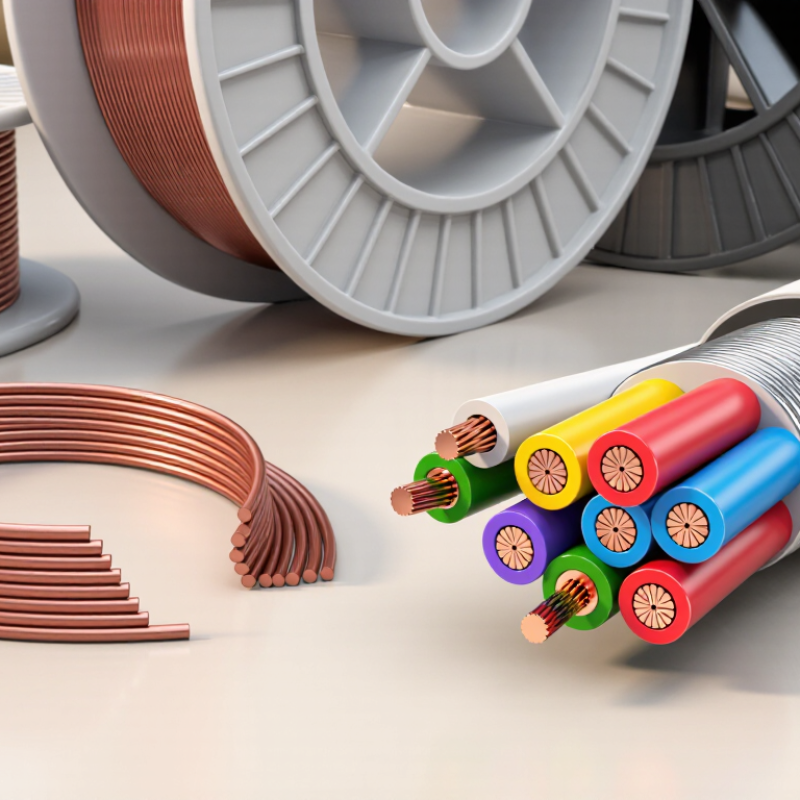
A wire is usually a single electrical conductor. It may be solid or made from many fine strands. Copper and aluminum are common conducting materials. Insulation surrounds the conductor and helps prevent accidental contact. A bare grounding wire is an important exception. In a small circuit, one insulated wire may connect a switch to a light. Its size, called gauge, affects current capacity and heat. Thicker conductors generally carry more current safely. However, length and installation conditions also matter.
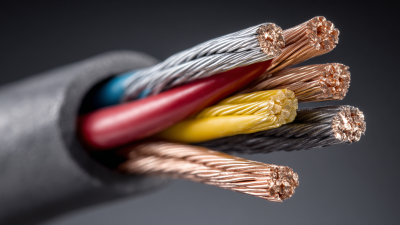
A cable contains two or more conductors grouped inside one outer covering. Each conductor may have separate insulation, while the cable jacket adds protection from moisture, abrasion, or movement. For example, a power cable might contain live, neutral, and grounding conductors. Some cables also include shielding to reduce electrical interference. The simple rule is useful, but it is not perfect. In technical work, people sometimes use “wire” and “cable” casually. That habit can create confusion during repairs or equipment selection. Check the printed markings, conductor count, voltage rating, temperature rating, and approved installation method. A flexible stranded wire may suit a moving machine, while a rigid solid wire may fit a fixed connection. I have found that visual inspection alone is unreliable. A cable can look strong yet lack the insulation required for its environment. Always compare the product specifications with local electrical requirements before installation.
What Is the Difference Between Cable and Wire?
How Wires and Cables Are Constructed
A wire usually contains one electrical conductor. A cable combines two or more conductors inside one protective jacket. Each conductor commonly uses copper or aluminum. Copper bends easily and carries current efficiently. Aluminum weighs less and often reduces material cost.
Construction changes with the application. A basic wire may have a metal core and PVC insulation. A power cable can add insulation, fillers, shielding, armor, and an outer jacket. The filler keeps conductors positioned around the center. Shielding limits electromagnetic interference. Armor helps resist crushing, moisture, and accidental impact. The boundary is not perfectly tidy. Some specialized cables contain one conductor with several protective layers. A practical inspection should check the conductor count, insulation type, diameter, and markings. IEC 60228 classifies conductor sizes and flexibility. IEC 60502-1 covers many insulated power cables. These standards support consistent testing and installation decisions. The International Energy Agency’s Electricity 2024 report projects global electricity demand growth of about 4% in 2024 and 2025. More demand increases pressure for reliable conductor design.
Tips: Never judge capacity by thickness alone. Check voltage rating, temperature rating, installation method, and allowable current. A thick jacket may hide a small conductor. Heat remains a common weak point. National fire investigation data also repeatedly links electrical distribution equipment with building fires, so damaged insulation deserves immediate attention. I would still verify every specification against the local electrical code. Reports help, but site conditions can change the answer.
| Comparison Dimension | Wire | Cable |
|---|---|---|
| Basic Definition | A single electrical conductor, either solid or made from multiple fine strands. | An assembly containing two or more insulated conductors, or a group of conductors enclosed in a common sheath. |
| Conductors | Usually one conductor. It may be solid or stranded, depending on the required flexibility and application. | Usually two or more conductors arranged together. Conductors may carry power, control signals, data, or communication signals. |
| Typical Construction | Metal conductor with optional insulation, such as thermoplastic or rubber-based insulation. | Individual conductors, insulation around each conductor, fillers or separators when needed, an optional shield, and an outer jacket or sheath. |
| Common Conductor Materials | Copper and aluminum are common because they provide useful electrical conductivity and practical mechanical performance. | Copper and aluminum are also widely used, with the choice depending on conductivity, weight, cost, installation method, and environmental conditions. |
| Insulation | May be bare or insulated. Insulation is selected according to voltage, temperature, moisture, chemicals, and mechanical requirements. | Each conductor may have its own insulation, while the complete assembly commonly has an additional protective jacket. |
| Flexibility | A stranded wire is generally more flexible than a solid wire of the same conductor size. | Flexibility depends on conductor stranding, conductor count, insulation, fillers, shielding, and jacket construction. More layers can increase stiffness. |
| Protection | A single insulated wire has limited protection against abrasion, impact, moisture, and electromagnetic interference unless additional protection is provided. | The outer jacket can protect internal conductors from abrasion, moisture, sunlight, chemicals, and mechanical stress. Some cables also include armor or shielding. |
| Typical Applications | Internal equipment wiring, electrical panels, grounding connections, motor connections, and wiring inside enclosures. | Building power distribution, industrial control systems, flexible cords, communication systems, instrumentation, and outdoor or buried installations. |
| Shielding Options | A single wire normally has no integrated electromagnetic shield, although it can be installed inside a shielded enclosure or conduit. | May include a foil shield, braided shield, concentric conductor, or other metallic screen to reduce electromagnetic interference. |
| Installation Considerations | Requires suitable routing, insulation support, terminals, conduit, or other protective methods when exposed to hazards. | The cable must be selected for its installation environment, bend radius, load, voltage rating, temperature rating, and exposure to moisture or chemicals. |
| Main Advantage | Simple construction, easy termination, and a wide range of solid and stranded configurations. | Multiple conductors and protective layers can be combined into one organized assembly, simplifying routing and improving environmental protection. |
| Key Limitation | A single wire cannot independently provide the complete group of power or signal paths that many systems require. | More materials and construction layers can increase diameter, weight, cost, and minimum bend radius. |
What Is the Difference Between Cable and Wire?
Key Differences in Structure and Function
A cable and a wire may look similar, but their construction serves different jobs. A wire usually contains one conductor, either solid or stranded, covered by insulation. It carries electrical current between two points. In a workshop, a single insulated wire can connect a switch to a terminal. Its small size makes routing easy, especially inside compact equipment.
A cable groups two or more insulated conductors under one outer jacket. Some cables also include shielding, fillers, drain wires, or protective armor. This layered structure controls interference and protects conductors from moisture, abrasion, and pulling forces. Function changes with the arrangement. Power cables handle higher loads, while signal cables preserve low-level information. A cable can also carry power, data, or both, depending on conductor design. The outer jacket is not merely cosmetic. It helps maintain separation and improves mechanical safety during installation.
Choosing between them requires more than counting conductors. Check voltage, current, temperature, bending radius, and installation environment. A stranded wire bends repeatedly, while a solid wire stays firm in fixed routes. I have seen confusion arise when “wire” describes an entire cable in casual speech. That shortcut is understandable, but it can hide important specifications. Even experienced installers should verify the construction before selecting connectors or protective supports. A neat appearance is not proof of suitability.
Wire and cable serve different jobs, although people often use the terms interchangeably. A wire usually contains one conductor, solid or stranded, with insulation around it. It suits short internal connections, such as control panels, appliances, lighting fixtures, and circuit boards. A cable groups two or more insulated conductors under one protective jacket. That structure improves organization and protection in demanding installations.
Building systems use wires inside walls, switches, and distribution boards. Electricians may choose solid wire for fixed routes because it stays firmly in terminals. Stranded wire bends more easily around machinery and movable equipment. Cables support longer or harsher paths, including factory motors, elevators, outdoor lighting, and underground power. In practice, heat, moisture, vibration, voltage, and bending radius often decide the selection. I have seen routing space influence the choice more than conductor size. That judgment can still be wrong without a proper load and temperature review.
Renewable energy is expanding these applications. The International Energy Agency’s Renewables 2024 report expects global renewable capacity to grow by about 5,500 gigawatts between 2024 and 2030. Solar arrays therefore need weather-resistant cables between modules, inverters, and storage equipment. The IEA’s Global EV Outlook 2024 recorded almost 14 million electric car sales in 2023, increasing demand for charging cables and high-current internal wiring. Data centers also require structured communication cables, power cables, and flexible maintenance leads. Small details matter. A tight bend, poor gland, or undersized conductor can create heat, signal loss, or early failure.
A wire is usually one electrical conductor, either bare or insulated. A cable normally groups two or more insulated conductors inside one protective jacket. Terminology varies by code and region. That detail matters. For a lamp repair, a flexible wire may be practical. For a branch circuit, a sheathed cable often provides cleaner routing and better mechanical protection.
Choose the wire or cable by load, distance, environment, and installation method. Check the conductor’s ampacity, insulation temperature rating, voltage drop, and approved use. The National Fire Protection Association’s electrical code tables require ampacity adjustments when conductors share raceways or operate in high temperatures. Ignoring those conditions is a common design mistake. Cable is not automatically safer.
The International Energy Agency’s Electricity 2024 report projects global electricity demand to rise by an average 3.4% annually through 2026. Higher loads make conductor sizing more important, especially around chargers, heat pumps, and workshop equipment. For long runs, calculate voltage drop rather than guessing from conductor size. In wet, buried, outdoor, or high-vibration locations, select an insulation and jacket rated for that exposure. IEC 60228 classifies conductor resistance and flexibility, which helps compare solid and stranded constructions. Stranded wire bends easily, but it can be harder to terminate securely. Solid conductors hold terminals well, yet repeated movement can damage them. I would verify the local code, load calculation, and termination hardware before choosing. Small installation details often change the correct answer.
A wire is typically a single electrical conductor with insulation or a protective coating. A cable is an assembly of two or more insulated conductors contained in one outer jacket. The example below compares a single-conductor wire with a common four-conductor cable configuration.
Choose a wire when a single conductor is sufficient and routing is simple. Choose a cable when several conductors need to be grouped, protected, and installed together. Always verify conductor size, insulation rating, voltage rating, temperature rating, flexibility, and local electrical-code requirements before installation.