How to Choose the Right SWA Cable for Global Projects?

How to Choose the Right SWA Cable for Global Projects?

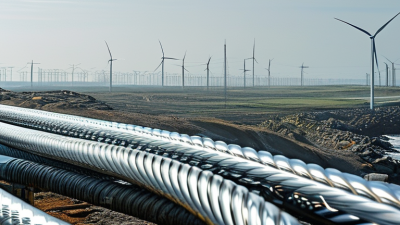
Choosing the right SWA cable for a global project is not a simple catalogue decision. Cable engineer Chris Morton explains, “The best cable is the one that remains safe, compliant, and serviceable in its real environment.” That principle matters when a project crosses climates, standards, and supply chains.

A cable suitable for a dry plant room may struggle beside a humid coastal road. Salt, ultraviolet exposure, soil movement, rodents, and standing water can affect the cable’s performance. The selection process should examine conductor size, rated voltage, insulation, armour, bedding, outer sheath, and installation method. Short circuit conditions matter too.

Standards cannot be assumed. BS 5467 may suit one specification, while IEC 60502-1 or a local national standard may control another. Confirm acceptance with the project engineer, utility authority, and independent testing body. Certification should match the destination market, not merely the exporting country.

Look at the whole route.

SWA cable may be installed in trays, ducts, trenches, or buried ground. Each method changes mechanical protection, heat dissipation, and allowable current. Calculations should include ambient temperature, grouping, soil thermal resistivity, voltage drop, and fault-clearing time. In practice, drawings are sometimes incomplete. That is where expensive mistakes begin.

A robust choice also considers factory traceability, drum protection, delivery length, termination kits, and replacement availability. A technically correct cable can still delay commissioning if accessories are unavailable locally. Recheck every assumption. Global projects rarely fail because one specification looks too short; they fail because small site realities were ignored.
How to Choose the Right SWA Cable for Global Projects?

Define SWA Cable Types and Their Global Applications

How to Choose the Right SWA Cable for Global Projects?

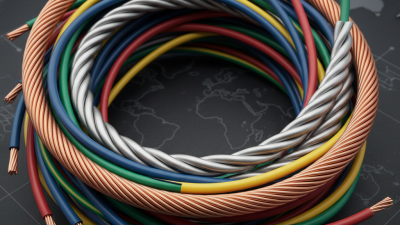
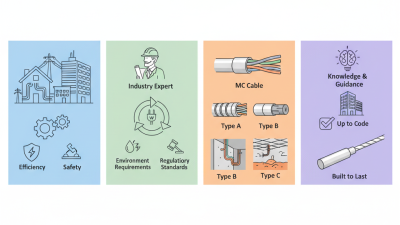
Steel Wire Armoured (SWA) cable protects conductors with a mechanical steel layer. It suits fixed installations where impact, moisture, or soil pressure may occur. Multicore SWA cables commonly serve power distribution, pumps, control panels, and industrial buildings. Single-core designs support higher-current systems, but their armour arrangement needs careful engineering. PVC outer sheaths fit many indoor and outdoor installations. LSZH sheaths can reduce smoke and corrosive emissions in enclosed public areas. Cable voltage, conductor material, cross-sectional area, and armour type must match the project design. Local installation rules still matter.

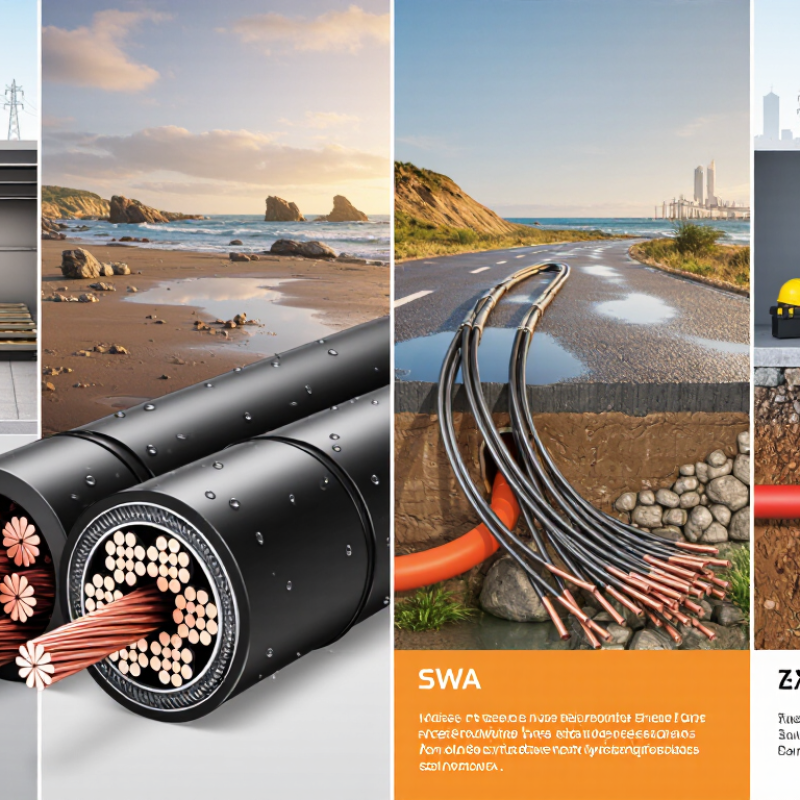
Global applications demand more than selecting a familiar cable size. A coastal project may need stronger moisture protection and corrosion-resistant construction. A desert site requires attention to heat, ultraviolet exposure, and cable temperature ratings. Underground routes need suitable bedding, drainage, and mechanical protection. In areas with strict fire-safety requirements, sheath performance deserves early review. I have seen projects specify the correct current rating but overlook bending space near termination glands. That small error can delay installation. It is not always obvious.

Tips: Confirm the destination standard before ordering. Check voltage, ambient temperature, soil conditions, fire performance, and installation method. Verify gland compatibility with the armour and sheath. Keep test certificates, factory data, and calculation records together. Do not assume one SWA type fits every country. A qualified local engineer should review the final selection, especially where earthing and fault protection are critical.

Assess Voltage, Current, and Environmental Requirements

Choosing the right SWA cable starts with the load schedule, not the cable catalogue. Confirm system voltage, phase arrangement, fault level, and continuous current at each termination. IEC 60502-1 covers power cables from 1 kV to 3 kV, while local rules may require different testing. Voltage drop deserves equal attention. A long 400 V feeder can lose useful voltage before a motor starts. Calculate running and starting conditions. Then verify short-circuit withstand for the conductor and armour. Keep the margin visible. A hidden assumption remains a risk.

Current capacity depends heavily on installation. IEC 60287 calculations consider conductor temperature, ambient conditions, grouping, and thermal resistance. Six loaded cables in a crowded tray will not behave like one cable in open air. Check declared ampacity, then apply local derating factors. For buried routes, record soil thermal resistivity and seasonal moisture. These details can change the result substantially. Environmental screening should include UV exposure, water, salt spray, chemicals, rodents, and mechanical impact. The Global Wind Energy Council’s Global Wind Report 2024 recorded 117 GW of new wind capacity in 2023. The IEA’s Electricity 2024 report forecasts global electricity demand to grow by an average 3.3% annually through 2026. Outdoor routes are expanding. That does not make every SWA design suitable. Recheck assumptions after installation; drawings are often cleaner than trenches.

Verify Standards, Certifications, and Regional Compliance

Choosing the right SWA cable for a global project starts with documented compliance, not a familiar specification. Confirm the required voltage rating, conductor material, insulation, sheath, armour, and temperature range. Then check whether the cable follows the project’s required standard, such as IEC or a national equivalent. Standards can look similar while testing different properties.

In project reviews, I have seen teams accept a certificate without checking its scope. That is risky. Verify the certificate number, issuing laboratory, test date, cable construction, and approved voltage range. Match every detail with the delivered cable and its technical datasheet. A missing suffix can change the product classification. Small detail. Big consequence.

Regional compliance also affects installation. A cable accepted in one country may require additional declarations, markings, fire performance evidence, or approved glands elsewhere. Check requirements for electrical safety, environmental substances, customs documentation, and local installation codes. Do not treat CE, UKCA, or similar markings as universal approval. They may cover specific obligations only. Ask for current declarations and independent test reports. I once assumed an old project specification remained valid, but the local rules had changed. That mistake could have delayed procurement. Record the exact revision used, the destination country, and the responsible compliance reviewer before placing an order.

How to Choose the Right SWA Cable for Global Projects?

Verify the applicable regional standard, certification requirements, construction details, and voltage rating before selecting an SWA cable. The chart compares commonly referenced low-voltage cable standards; the 0.6/1 kV value is a nominal voltage designation, not a substitute for project-specific compliance verification.

IEC 60502-1, BS 5467, AS/NZS 5000.1, and SANS 1507-3 include low-voltage cable applications using the 0.6/1 kV designation. Final selection should also confirm conductor material, insulation and sheath compounds, armour requirements, fire performance, installation method, local approvals, and certification documentation.

Select Suitable Materials, Construction, and Cable Dimensions

How to Choose the Right SWA Cable for Global Projects?

Material selection should follow the site, not habit. Copper offers strong conductivity and compact dimensions, while aluminium reduces weight and material cost. XLPE insulation commonly supports higher conductor temperatures than traditional PVC insulation. However, temperature ratings must match the selected standard and installation method. For wet or chemically exposed areas, sheath resistance deserves careful testing. PVC may suit ordinary locations, while low-smoke, halogen-free compounds can reduce hazardous fumes during fire conditions. The 2023 International Energy Agency report estimates that over 80 million kilometres of grids may be added or replaced globally by 2040. That scale makes material consistency and documented traceability essential.

Construction also changes performance. Galvanized steel wire armour can provide mechanical protection and a reliable earth path, but corrosion risk rises near coastal or industrial sites. Armour coverage, bedding, glands, and termination kits should be checked as one system. IEC 60502-1 provides a useful reference for many low-voltage power cables, although local requirements still control acceptance. Cable dimensions should come from current-carrying capacity, voltage drop, short-circuit withstand, installation grouping, ambient temperature, and burial depth. A larger conductor is not automatically better. Oversizing can complicate glands and increase pulling tension. A common site mistake is selecting by nominal current alone. It looks efficient. It is not always safe. Before approval, engineers should verify calculated dimensions against actual route drawings, fault levels, and regional inspection rules.

How to Choose the Right SWA Cable for Global Projects? - Select Suitable Materials, Construction, and Cable Dimensions

Selection Dimension Recommended Option Typical Specification or Range Why It Matters in Global Projects Important Verification
Rated Voltage Low-voltage SWA cable 0.6/1 kV, commonly used for fixed power distribution Suitable for many industrial, commercial, utility, and infrastructure systems Confirm the project voltage system, earthing arrangement, and local approval requirements
Conductor Material Annealed copper or aluminium Copper: compact or stranded; aluminium: typically selected for larger cross-sections and lower weight Copper offers higher conductivity and smaller overall dimensions; aluminium can reduce cable mass and material cost Check conductor resistance, termination compatibility, jointing requirements, and allowable voltage drop
Conductor Class Class 2 stranded conductor for fixed installations Defined by IEC 60228; Class 5 flexible conductors may be used where greater flexibility is required Class 2 provides a practical balance between installation handling and fixed-installation performance Do not specify flexible construction unless the installation method and applicable standard permit it
Insulation Cross-linked polyethylene (XLPE) Typical continuous conductor operating temperature: up to 90°C, subject to the applicable standard Provides a higher continuous operating temperature than common PVC insulation, supporting greater current-carrying capacity Verify emergency and short-circuit temperature limits, insulation thickness, and fire-performance requirements
Bedding Extruded PVC or low-smoke zero-halogen (LSZH) bedding PVC is common; LSZH is selected for enclosed or highly occupied areas where smoke and corrosive gases must be limited The bedding protects the insulated cores and provides separation from the armour Check smoke, halogen, flame-retardance, and toxicity requirements in the project specification
Armour Material Galvanized steel wire armour (SWA) Steel wires provide mechanical protection and may contribute to the protective-earth path when correctly designed Suitable for fixed installations with a risk of impact, crushing, or installation damage Confirm armour corrosion protection, fault-current withstand, gland bonding, and local earthing rules
Outer Sheath PVC, LSZH, or UV-resistant compound selected for the environment Common colours include black for general outdoor use; colour and marking depend on the applicable standard The sheath is the primary barrier against moisture, abrasion, sunlight, chemicals, and weathering Specify UV resistance, oil resistance, hydrocarbon resistance, cold flexibility, and burial suitability where applicable
Number of Cores 1, 2, 3, 4, or 5 cores according to the circuit Examples: 3-core for three-phase systems; 4-core for three-phase plus neutral; 5-core for three-phase, neutral, and protective conductor Correct core configuration simplifies installation and supports the intended protection and earthing scheme Confirm whether the protective conductor is integral, separate, or provided by the armour
Conductor Cross-Section Select by calculated design current, installation method, and correction factors Common metric sizes include 4, 6, 10, 16, 25, 35, 50, 70, 95, 120, 150, 185, 240, and 300 mm² Cross-section affects ampacity, voltage drop, short-circuit withstand, cable diameter, weight, and installation cost Use the governing national or international calculation method rather than selecting by current rating alone
Current-Carrying Capacity Calculate using the actual installation conditions Consider ambient temperature, soil thermal resistivity, grouping, spacing, installation depth, and ventilation The same cable size can have substantially different permissible current ratings in air, ducts, or buried systems Apply all relevant derating factors and verify the manufacturer’s tested data
Voltage Drop Increase conductor size or reduce circuit length when necessary Calculate using conductor resistance, reactance, power factor, load current, and route length Long international-project cable runs can experience unacceptable voltage drop even when thermal ampacity is adequate Use the project’s specified voltage-drop limit for feeders, lighting, motors, and sensitive equipment
Short-Circuit Performance Verify conductor and armour fault-current withstand Assessment depends on prospective fault current, clearing time, conductor material, and allowable temperature Ensures the cable remains safe until the protective device disconnects the fault Coordinate cable calculations with circuit-breaker or fuse characteristics and the earthing design
Installation Environment Select sheath and construction for indoor, outdoor, buried, ducted, or marine-adjacent locations Assess moisture, flooding, salt spray, chemicals, hydrocarbons, rodents, sunlight, vibration, and mechanical stress Environmental exposure can determine service life even when the electrical rating is satisfactory Specify additional protection such as ducts, trays, warning tape, separation, or enhanced sheath compounds where required
Minimum Bending Radius Follow the applicable cable standard and manufacturer’s installation instructions The required radius is normally expressed as a multiple of the overall cable diameter and varies by construction SWA cables are relatively stiff; inadequate bending can damage insulation, sheath, or armour Confirm the dynamic and static bending limits before routing through trays, glands, or tight service spaces
Cable Dimensions and Weight Choose a size that fits the route, supports, glands, and handling equipment Overall diameter and mass increase with conductor area, core count, insulation thickness, and armour size Dimensions affect drum selection, transport, pulling tension, tray fill, cleat spacing, and termination space Use confirmed production data for gland selection, bend design, pulling calculations, and logistics planning
Applicable Standard Use the standard named in the project specification Common references include IEC 60502-1 for low-voltage power cables, IEC 60228 for conductors, and BS 5467 for certain thermosetting-insulated armoured cables Standards define construction, testing, marking, electrical properties, and dimensional tolerances Avoid mixing requirements from different standards without engineering approval and documented conformity evidence
Testing and Documentation Require routine tests, specified type tests, and traceable quality documents Typical records may include conductor resistance, high-voltage testing, dimensional inspection, material certificates, and drum test reports Consistent documentation supports customs clearance, inspection, commissioning, and acceptance across different jurisdictions Align inspection and test plans with the contract, governing standard, and local regulatory authority
Engineering note: Final cable selection should be confirmed by a qualified electrical engineer using the project voltage, load schedule, installation method, environmental conditions, fault level, applicable standards, and local regulations.

Compare Suppliers, Installation Needs, and Long-Term Value

Choosing SWA cable for a global project requires more than comparing price per metre. The IEA’s Electricity 2024 report projects global electricity demand to grow by an average of 3.4% annually from 2024 to 2026. This growth increases pressure on cable reliability, delivery schedules, and technical documentation. Compare suppliers through conductor resistance, insulation tests, armour protection, factory inspection records, and traceable batch numbers. Certificates alone are not enough. Ask for recent test reports.

Installation conditions can change the correct cable design. Review soil moisture, ultraviolet exposure, bending radius, tray support, fire performance, and local termination practices. A cable suitable for a dry indoor plant may fail in a coastal trench. Confirm compliance with the project’s required IEC or national standards. Check gland compatibility before shipment. Small mismatches create expensive delays.

Long-term value also includes copper stability and maintenance access. The UNEP Global Status Report for Buildings and Construction 2024 states that buildings consumed about 32% of global energy and produced approximately 34% of global carbon emissions in 2022. Efficient infrastructure therefore deserves measurable durability, not only a lower purchase price. Consider voltage drop, expected load growth, warranty response, and spare-cable availability. Field experience shows that the cheapest offer can become costly after one failed termination. I still question every forecast, because project conditions rarely match the tender drawings perfectly. A missing trench detail can matter more than a small discount.