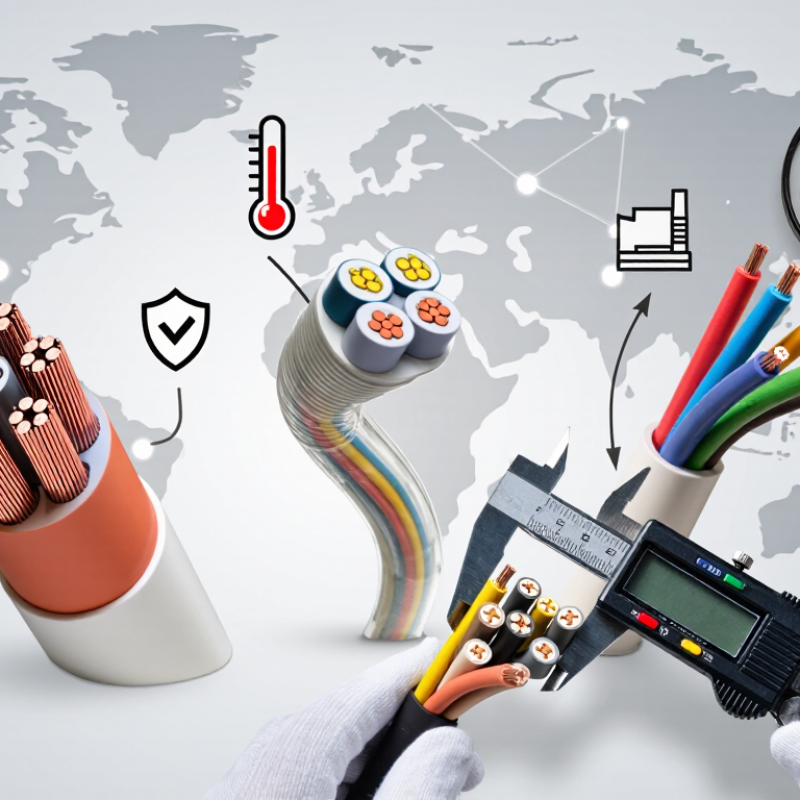
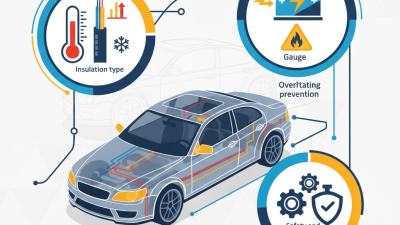
Choosing the right 3 core cable for global sourcing is not simply a price comparison. It is a technical decision shaped by voltage, installation conditions, compliance, and long-term reliability. A cable that performs well in a dry warehouse may fail early outdoors, underground, or near industrial machinery.
Electrical cable specialist Dr. Paul A. Clayton states, “The best cable is not the cheapest cable; it is the cable matched to its working environment.” This principle deserves careful attention. Buyers should examine conductor material, cross-sectional area, insulation type, sheath performance, temperature rating, and flexibility. The cable’s intended use must be clear. Fixed wiring, control equipment, pumps, and portable machinery may require different constructions.
Global sourcing adds another layer of risk. A supplier may provide attractive samples, yet production quality can vary without documented controls. Request technical datasheets, material declarations, test reports, batch records, and clear product markings. Confirm relevant international standards with a qualified engineer or compliance professional. Do not rely on a familiar certification logo alone.
Small details matter. A copper conductor should match the stated size. The insulation should remain stable after bending, heating, or moisture exposure. The outer sheath should resist the actual environment, not an imagined one. These checks can feel slow. They are still cheaper than rejected shipments or field failures.
There is no perfect sourcing formula. Even experienced buyers sometimes overlook packaging, local installation methods, or changing project conditions. A reliable decision combines supplier evidence, independent testing, and practical engineering judgment. This guide explains how to evaluate each factor before selecting a 3 core cable for international procurement.
Choosing a three-core cable starts with the load, not the catalog photograph. Define nominal voltage, operating current, frequency, phase arrangement, and maximum fault current. State whether the third core is neutral, protective earth, or a control conductor. This detail is often missed. It changes the cable construction and testing route.
ENERGY DEMAND The International Energy Agency reported in Electricity 2024 that global electricity demand could grow by about 4% in 2024 and 2025. Rising demand increases pressure on distribution equipment and leaves less tolerance for undersized conductors. Select conductor cross-section from verified ampacity tables. Then derate for ambient temperature, grouping, conduit, and continuous load. A 2.5 mm² cable is not automatically safe at every site.
Installation conditions must become measurable requirements. Specify indoor or outdoor use, UV exposure, water, oil, vibration, burial depth, bend radius, and minimum temperature. IEC 60364-5-52 provides guidance on wiring systems and current-carrying capacity. Product construction should also match applicable IEC 60502-1 or IEC 60227 requirements. Ask for conductor class, insulation and sheath compounds, test voltage, flame performance, batch traceability, and accredited laboratory reports. IRENA’s Renewable Capacity Statistics 2024 recorded 473 GW of renewable capacity additions in 2023. More cables now face outdoor and inverter-rich environments. Still, a clean datasheet can hide a weak assumption. Recheck harmonics, solar heating, connector compatibility, and actual routing before purchase. One overlooked detail can become a hot termination.
Choosing a three-core cable starts with the conductor material. Copper offers excellent conductivity and flexible installation. It suits compact panels, moving equipment, and longer circuit runs. Aluminum weighs less and often reduces material cost. However, it needs larger cross-sectional area and careful termination. Loose connections can create heat. Always compare resistance, weight, transport cost, and local installation practices before approving a quotation.
Insulation controls safety, temperature tolerance, and service life. PVC is practical for general indoor and outdoor applications. XLPE handles higher operating temperatures and can improve current capacity. Rubber insulation remains useful where repeated movement or mechanical stress exists. Check the rated voltage, temperature range, flame behavior, oil exposure, and moisture conditions. A cable that passes a factory test may still perform poorly in a wet conduit.
Construction affects handling and reliability. A round cable usually pulls more smoothly through ducts. Clear core identification reduces wiring mistakes during installation. Fillers, bedding, shielding, and outer jackets should match the site environment. Request conductor resistance, insulation thickness, dimensional reports, and routine test records. Do not judge quality by appearance alone. The lowest price can hide thinner insulation or inconsistent stranding. One decision may still require compromise. Flexible cables often cost more, while rigid designs may simplify fixed installations. Check the complete specification before comparing suppliers.
How to Choose the Right 3 Core Cable for Global Sourcing
Verify Standards, Certifications, and Country-Specific Compliance
Choosing a three-core cable for global sourcing starts with the destination, not the supplier’s catalog. Confirm voltage, frequency, conductor size, insulation, temperature rating, and installation method. A cable for fixed machinery may need different construction from one exposed to sunlight or repeated flexing. Check the country’s adopted electrical standards, including any relevant IEC-based requirements. Similar-looking cables can carry different approval obligations.
Request the complete certificate, not only a logo or scanned cover page. Review the issuing laboratory, report number, tested cable type, conductor size, and production site. The certificate should match the actual sheath marking and technical datasheet. Check whether testing covers the intended voltage and environment. A certificate is not automatically valid everywhere. National conformity marks, importer declarations, labeling rules, and language requirements may also apply.
Create a country compliance matrix before placing an order. Include standards, required marks, test reports, customs documents, and inspection responsibilities. I once treated a valid test report as sufficient, but the destination still required clearer product labeling. That was an avoidable mistake. Ask the supplier for recent samples and compare them with approved documents. Keep records of revisions, because a small insulation change can invalidate earlier evidence. Leave room for review. Requirements can change faster than purchasing schedules.
| Evaluation Dimension | What to Verify | Typical Requirement or Reference | Why It Matters in Global Sourcing | Required Evidence |
|---|---|---|---|---|
| Intended application | Fixed wiring, portable equipment, industrial machinery, control circuits, or low-voltage power distribution | Choose the product family according to installation method, mechanical movement, environment, and load type | A cable suitable for fixed installation may not be suitable for repeated flexing, outdoor exposure, or industrial machinery | Application specification, installation method, load schedule, and risk assessment |
| Number of cores | Three insulated conductors, with or without a protective earth conductor | Confirm whether the construction is 3-core only or includes an additional protective earth, drain wire, screen, or filler | Core count affects wiring configuration, termination hardware, outer diameter, and local installation approval | Cross-sectional drawing, core identification, and approved construction sheet |
| Conductor material and class | Copper or aluminium; solid, stranded, or flexible conductor | IEC 60228 defines conductor classes; Class 1 is solid, Class 2 is stranded for fixed installations, and Class 5 is flexible | Conductor class affects bend radius, termination method, resistance, and suitability for moving equipment | Conductor material declaration, IEC 60228 test report, and DC resistance results |
| Nominal cross-sectional area | Conductor size in mm² and allowable current under the actual installation conditions | Common sizes include 0.75, 1.0, 1.5, 2.5, 4, 6, 10, and 16 mm²; ampacity must be calculated rather than assumed | Incorrect sizing can cause excessive voltage drop, overheating, nuisance tripping, or non-compliance | Conductor resistance, ampacity calculation, voltage-drop calculation, and product datasheet |
| Rated voltage | Voltage rating shown as U0/U | Examples include 300/500 V, 450/750 V, and 0.6/1 kV; select the rating required by the installation standard | The cable voltage rating must be equal to or higher than the system voltage and installation requirement | Type-test report, marking photograph, and voltage withstand test results |
| Insulation and sheath material | PVC, elastomer, thermoplastic elastomer, cross-linked polyethylene, or another specified compound | IEC 60227 commonly covers PVC-insulated cables up to and including 450/750 V; IEC 60245 covers rubber-insulated cables up to and including 450/750 V | Material selection determines temperature rating, flexibility, oil resistance, weather resistance, and fire performance | Compound technical data, material declaration, thermal ageing results, and compatibility statement |
| Temperature rating | Maximum conductor operating temperature and permitted ambient range | Typical PVC cable ratings are often 70°C at the conductor, while some cross-linked or rubber constructions are rated higher; confirm the exact product standard | Temperature limits affect continuous current capacity, installation grouping, and service life | Datasheet, thermal ageing test, current-carrying-capacity calculation, and marking verification |
| Fire and smoke performance | Flame propagation, smoke emission, acidity, and halogen content where required | For construction products in the European market, EN 50575 may apply to power, control, and communication cables permanently installed in construction works; reaction-to-fire classification must be specified | Fire requirements vary by building type, public occupancy, and national implementation rules | Classification report, notified-body documentation where applicable, and flame-test report |
| Environmental compliance | Restricted substances, chemical content, and material traceability | EU shipments may require compliance with RoHS Directive 2011/65/EU and REACH Regulation (EC) No 1907/2006, subject to product scope and applicable exemptions | Substance restrictions affect import clearance, customer declarations, and recycling obligations | RoHS declaration, REACH statement, restricted-substance test report, and bill of materials |
| European Union market | Low-voltage safety, technical documentation, and product marking | Electrical products within the applicable voltage range may fall under Directive 2014/35/EU; CE marking is applied only when all relevant legislation and conformity requirements are met | CE marking is not a substitute for selecting the correct harmonised or designated standard and maintaining a technical file | EU Declaration of Conformity, technical file, risk assessment, test reports, and product label |
| United Kingdom market | Market-specific conformity route and importer details | Verify the current requirements for the Electrical Equipment (Safety) Regulations 2016 and whether UKCA, CE recognition, or another accepted route applies at the time of shipment | Requirements and recognition arrangements can change; the label and documentation must match the current UK rules | UK Declaration of Conformity where applicable, technical file, importer information, and current marking assessment |
| United States market | National Electrical Code application, cable type designation, and product listing | Verify the applicable NEC article and whether the cable requires an approved listing or certification for its intended use; flexible cords and cables are addressed in NEC Article 400 | IEC compliance alone may not satisfy U.S. installation, inspection, or procurement requirements | Applicable listing certificate, construction specification, flame/smoke test reports, and label review |
| Canada market | Canadian Electrical Code requirements and certification acceptance | Confirm the required Canadian cable type, marking, and certification route for the province and installation category | Canadian requirements may differ from U.S. requirements even when the cable has a similar construction | Canadian certification evidence, cable type marking, test reports, and installation-use statement |
| Australia and New Zealand | Local cable construction, current-carrying capacity, and regulatory marking | Common references include AS/NZS 5000.1 for electric cables up to and including 0.6/1 kV and AS/NZS 3008.1.1 for cable selection and ampacity calculations; confirm the exact scope | Conductor size and installation method must be assessed using local derating, ambient temperature, and voltage-drop rules | AS/NZS test evidence, certification or approval documentation where required, and local ampacity calculation |
| India market | Applicable Indian Standard and compulsory certification scope | IS 694 covers thermoplastic insulated and sheathed cables and flexible cords up to and including 1100 V; verify current Bureau of Indian Standards requirements and product scope | Mandatory certification may apply to specific cable categories and can affect importer and customs clearance requirements | Valid BIS licence or applicable conformity documentation, IS test reports, and required product marking |
| Brazil market | Brazilian conformity assessment and Portuguese product information | Verify whether the cable category is subject to INMETRO compulsory certification and which Brazilian technical regulation applies | Certification, label language, plug or termination configuration, and importer responsibilities may be required before sale | Current INMETRO certificate where applicable, test reports, Portuguese label, and conformity documentation |
| China market | Product category, national standard, and compulsory certification scope | Check whether the cable falls within the China Compulsory Certification catalogue and identify the applicable GB standard before production | CCC scope is product-specific; an IEC report alone does not establish CCC compliance | CCC certificate where applicable, GB test report, Chinese marking, and factory inspection records |
| Mechanical protection | Armour, braid, screen, filler, bending radius, crush resistance, and impact resistance | For underground, industrial, or exposed installations, evaluate whether an armoured or otherwise mechanically protected construction is required | Mechanical damage is a major cause of premature cable failure and safety incidents | Construction drawing, minimum bending radius, mechanical test results, and installation instructions |
| Ingress and outdoor suitability | Water resistance, UV resistance, oil resistance, and enclosure interface | Do not infer outdoor or wet-location suitability from the insulation material alone; verify the product designation and test method | Moisture, sunlight, and chemicals can degrade insulation and sheath materials | Environmental test reports, compound data, IP-system compatibility statement, and application limitations |
| Core identification | Colour, numbering, protective-earth identification, and polarity convention | Use the colour or numbering system required by the destination market and installation standard; protective-earth identification must not be ambiguous | Correct identification reduces wiring errors and supports inspection and maintenance | Colour/marking specification, production sample, label artwork, and destination-market review |
| Routine production testing | Continuity, conductor resistance, insulation resistance, and high-voltage withstand | Define 100% routine tests and acceptance limits in the purchase specification; test methods must match the selected product standard | Routine testing detects manufacturing defects before shipment rather than relying only on type tests | Batch test certificate, calibrated equipment records, sampling plan, and nonconformity procedure |
| Factory and batch traceability | Production lot, raw-material lot, extrusion line, test date, and shipment reference | Require a unique lot or drum number linked to inspection and test records | Traceability supports recalls, warranty claims, customs inquiries, and root-cause investigation | Lot records, drum labels, certificate of conformity, inspection report, and retained samples |
| Packaging and logistics | Drum or coil dimensions, maximum handling length, moisture protection, and marking durability | Specify cable length tolerance, drum protection, winding direction, gross weight, and storage conditions | Improper packaging can cause sheath damage, tangling, moisture ingress, and unexpected logistics costs | Approved packing specification, packing list, drum inspection photos, and shipping labels |
| Final sourcing decision | Technical fit, legal compliance, total cost, and supply continuity | Select the cable only after the destination-market standard, certification route, construction, test evidence, and change-control process are approved | The lowest purchase price may create higher costs through redesign, rejected shipments, installation failure, or regulatory non-compliance | Signed technical specification, compliance matrix, approved sample, quality agreement, and change-notification clause |

Choosing a 3 core cable for global sourcing requires more than comparing quotations. Assess each supplier’s experience with conductor size, insulation, voltage rating, and installation conditions. Ask for drawings, material specifications, and recent production records. A capable supplier should explain how copper purity, stranding, and sheath thickness affect flexibility and service life. Request samples from normal production, not specially prepared pieces. That difference matters.
During supplier audits, inspect incoming material checks, extrusion lines, twisting equipment, and final testing areas. Review calibration records for resistance meters, spark testers, and tensile machines. Quality control should cover conductor resistance, insulation thickness, dielectric strength, dimensions, and visual appearance. Ask how nonconforming cable is isolated and traced by batch. Traceability should reach the copper lot and production shift. Independent laboratory testing can support internal results, especially for first orders. Still, paperwork is not proof. Compare test data with physical samples and shipment records.
Production capability includes capacity, lead times, tooling flexibility, and contingency planning. Confirm whether the factory can maintain consistent output during material price changes or urgent schedule shifts. Check packaging for moisture protection, clear markings, and reel stability. I once focused too heavily on a low unit price and overlooked weak batch records. The shipment passed basic inspection, but investigating a later complaint took too long. That experience changed my supplier review process. I now score technical communication, corrective-action speed, and repeatability alongside cost. Some factories look impressive during a visit. Their ordinary Tuesday matters more.
How to Choose the Right 3 Core Cable for Global Sourcing
A low factory quote can hide expensive risks. Calculate total cost per meter, not only the purchase price. Include copper, insulation, testing, export packing, freight, insurance, duties, and local delivery. For example, 1,000 meters at $2.40 per meter becomes $2,400 before logistics. Add $680 freight, $120 insurance, $360 duty, and $240 inland delivery. The landed cost reaches $3.80 per meter. Small errors matter.
Copper deserves close attention. The World Bank’s Commodity Markets Outlook has repeatedly identified copper as sensitive to energy demand and supply disruptions. Request the conductor weight and copper grade. A lighter conductor may reduce the quotation, but it can increase heating and replacement risks. Confirm voltage rating, insulation material, sheath durability, temperature range, and independent test reports. A missing certificate can delay customs clearance or site approval.
Logistics also changes the risk calculation. UNCTAD’s Review of Maritime Transport 2024 reported global maritime trade growth of 2.4% in 2023 and expected 2.7% in 2024. More cargo can mean tighter vessel space and unstable freight rates. The World Bank’s Logistics Performance Index 2023 also shows major differences in customs, infrastructure, and delivery reliability between markets. Use two shipping scenarios: normal transit and a delayed route. Add buffer stock for installation schedules. It is not perfect, but ignoring delay costs is worse. A spreadsheet can still lie. Verify every assumption with recent quotations and supplier production records.
Indicative landed-cost comparison for 1,000 m of 3-core 2.5 mm² copper/PVC cable delivered to one EU destination. Values are shown in USD and should be validated against current supplier quotations, freight rates, exchange rates, and tariff classifications.
How to read the chart: Material and conversion costs form the supplier price, while logistics and import charges determine landed cost. The risk reserve is a planning allowance for lead-time variation, quality claims, currency movement, and supply disruption. A lower total cost is preferable only when the required standards, testing, delivery reliability, and continuity of supply are also satisfied.