How to Choose Tension Load Cells at 2026 Canton Fair?
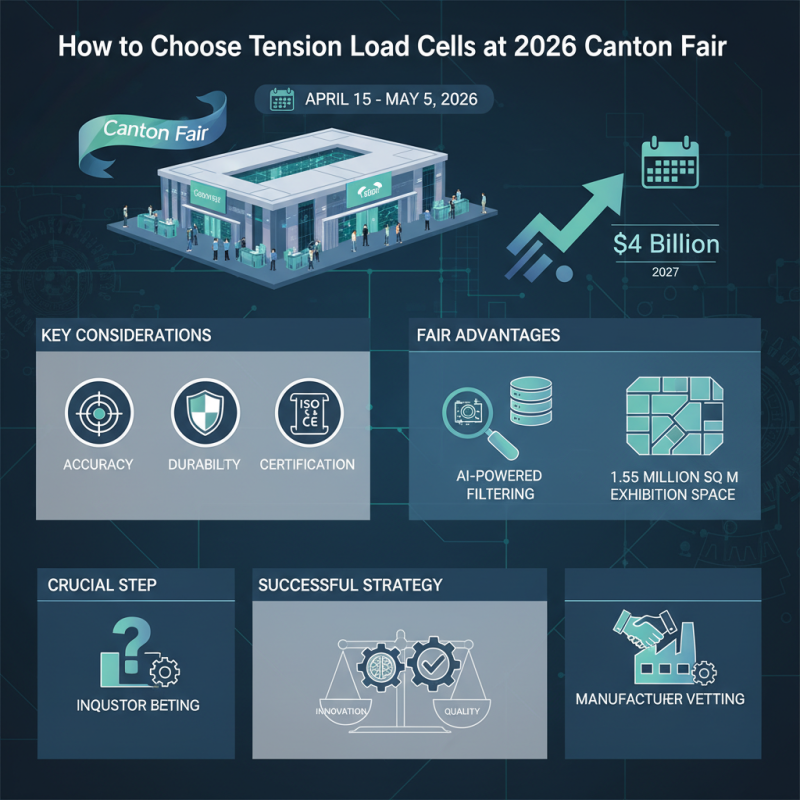
The 2026 Canton Fair presents an exciting opportunity for businesses seeking Tension Load Cells. As one of the largest trade fairs, it covers a diverse range of advanced manufacturing technologies and electronic products. The event runs from April 15 to May 5, showcasing cutting-edge innovations.
Data from recent industry reports indicate that the global load cell market is expected to grow substantially. By 2027, the market could reach $4 billion, driven by innovations in sensor technology. This growth increases the importance of choosing the right Tension Load Cell for various applications. Here, aspects such as accuracy, durability, and certification, such as ISO and CE, must be considered.
AI-powered tools at the fair allow buyers to filter suppliers rapidly. This advancement enhances the search for quality Tension Load Cells amidst an extensive exhibition area of 1.55 million square meters. However, amid technological advancements, one must remember the importance of reviewing manufacturers. Not every supplier is equally reliable, which calls for careful scrutiny. Balancing innovation with quality is crucial in such a competitive landscape.
Understanding the Basics of Tension Load Cells
Tension load cells play a critical role in measuring weight and force. These devices convert mechanical force into an electrical signal. They are essential in many industries, including manufacturing and logistics. Understanding their operation is key to selecting the right one.
When examining tension load cells, consider their capacity and accuracy. The range of weight they can measure is crucial. Too low a capacity can lead to overload. Too high, and you may not get precise readings. Accuracy is equally important. A small deviation can cause significant problems in your operations.
Another factor is the environment. Will it operate in harsh conditions? Heat, moisture, or dust can affect performance. You may need to consider protective enclosures or special materials. Making the right choice involves testing different options. Sometimes, the first pick may not meet specific needs. Adjusting your selection based on real-world feedback is vital. This is a learning process that can lead to better results.
Key Specifications to Consider When Choosing Load Cells
When selecting tension load cells at the 2026 Canton Fair, key specifications play a crucial role. One important factor is capacity. Ensure the load cell can handle the maximum weight you expect. An undersized cell can lead to inaccurate readings or even failure. Precision is vital; choose cells with high accuracy ratings for reliable results. Look for specifications like repeatability and hysteresis, which impact the consistency of measurements.
Another aspect to consider is environmental factors. Load cells should be resistant to moisture, dust, and temperature changes. This is critical if your operations are in harsh conditions. Also, look for information on installation and calibration procedures. Some load cells may require specialized setup, which can add to costs. There's a balance between features and budget.
Finally, consider connectivity options. Some load cells offer advanced connectivity features for data transmission. This can simplify integration with existing systems. However, complexity may increase troubleshooting issues. Balancing functionality and ease of use is essential. Evaluate your specific needs carefully; this can prevent regret later.
Evaluating Load Cell Manufacturers at the Canton Fair
Choosing the right tension load cells at the Canton Fair can be a challenging task. Evaluating manufacturers requires a clear understanding of your needs. The global load cell market is projected to reach $4 billion by 2026. This growth indicates increasing demand for reliable and accurate measurement devices.
When selecting a manufacturer, focus on their certifications and technology. Do they comply with ISO standards? Have they invested in advanced manufacturing processes? These factors can significantly affect the quality of the load cells you receive. Many manufacturers may offer competitive pricing, but the cheapest option is not always the best.
Tips: Ask for samples before making bulk orders. This allows you to test performance. Inspect the manufacturing facility if possible. Look for signs of quality control. Inquire about their warranty policy. A strong warranty indicates confidence in their product.
Do not overlook customer feedback. Check reviews and testimonials. Sometimes, a high-tech solution may not meet your specific application. Consider what others have experienced. The balance between innovation and practicality is crucial. Evaluate options carefully to avoid pitfalls.
Load Cell Types Comparison at 2026 Canton Fair
Importance of Application in Selecting Tension Load Cells
Choosing the right tension load cells at the 2026 Canton Fair is crucial for various applications. Different industries have unique needs. For instance, manufacturing may prioritize accuracy and reliability. Conversely, the construction sector may need durability and weather resistance. Understanding these specific requirements is vital for effective selection.
Application details play a significant role in your decision. Consider the environment where the load cells will be used. Extreme temperatures or humidity can impact performance. Additionally, think about the expected load range. Overestimating or underestimating can lead to failures and financial losses. Proper specification ensures longevity and effectiveness. Sometimes, it's easy to overlook these aspects. However, a well-considered choice can prevent complications later.
It's also essential to reflect on your expertise in load cell technology. If you’re new, consulting with experts can provide valuable insights. Engaging with manufacturers at the fair can clarify misunderstandings. Asking the right questions can bridge knowledge gaps. This engagement will help in making informed decisions tailored to your specific needs.
Insider Tips for Networking and Making Informed Decisions
Choosing tension load cells at the 2026 Canton Fair can be overwhelming. The fair's vast landscape presents numerous options. Effective networking is key. Engage actively with manufacturers and experts. Ask them about their technology and innovations. A genuine conversation can yield significant insights. Don’t hesitate to express your needs. This will help you find products tailored to your requirements.
As you scout for load cells, take notes. Write down specifications, prices, and advantages. Visualize the applications of each product. Consider how each cell fits into your projects. It's also crucial to ponder the potential challenges. Are there limitations or risks? Reassessing your choices aids in making informed decisions. Trust your instincts but back them with research. Each connection can lead to new opportunities.
How to Choose Tension Load Cells at 2026 Canton Fair? - Insider Tips for Networking and Making Informed Decisions
| Dimension | Weight Capacity (kg) | Material | Output Signal | Application |
| 50 mm x 100 mm | 500 | Stainless Steel | 4-20 mA | Industrial Weighing |
| 75 mm x 150 mm | 1000 | Aluminum | 0-10 V | Tension Measurement |
| 100 mm x 200 mm | 2000 | Carbon Steel | RS-232 | Load Monitoring |
| 150 mm x 300 mm | 3000 | Alloy Steel | Analog | Structural Testing |
| 200 mm x 400 mm | 5000 | Stainless Steel | Digital Output | Construction Industry |