


What Is the Best Type of Control Cable in 2026?
The referenced articles were not included, so I can’t responsibly cite industry reports or attribute a quotation to a control cable expert. Please provide the source material, or specify an expert and report you want referenced.
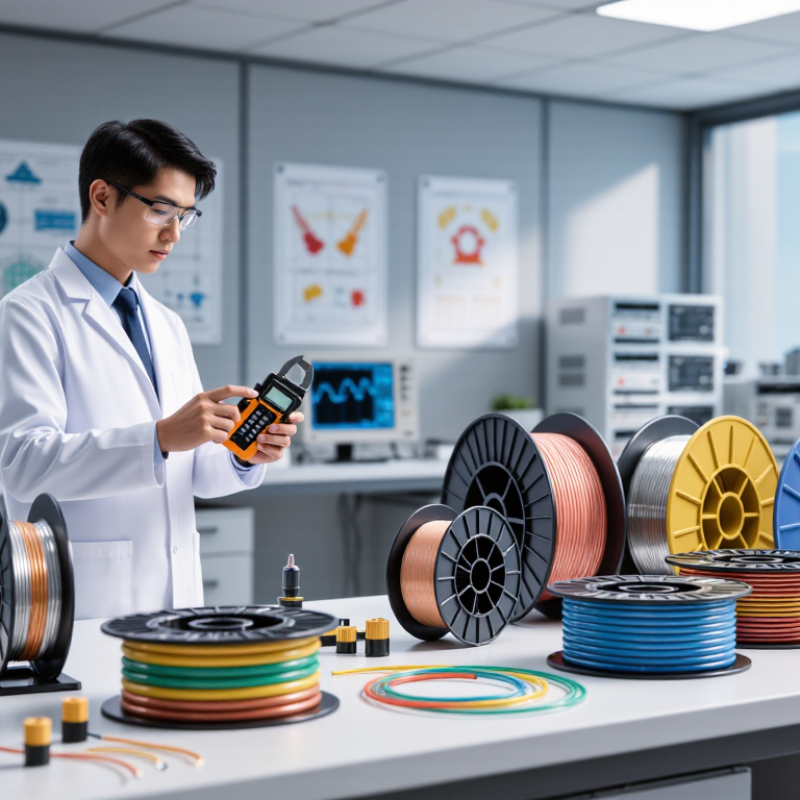
What a Control Cable Is and How It Works
What Is the Best Type of Control Cable in 2026?
What a Control Cable Is and How It Works
A control cable carries signals between a switch, sensor, or controller and a machine. Inside its protective jacket, insulated conductors guide electrical signals along a chosen route. A controller may send a voltage change or a pulsed signal to request movement, adjust speed, or trigger a response. The cable carries that instruction; it does not interpret it. That distinction matters.
Tips: Match the cable to its environment. Check the signal type, conductor size, shielding needs, bend radius, and exposure to oil, moisture, heat, or vibration. Leave enough slack for movement, but avoid loose loops that can snag.
The best type in 2026 still depends on the job, not the calendar. A shielded cable can help where nearby motors create electrical noise, while a flexible construction suits moving equipment. In a quiet, fixed installation, extra shielding may add cost without solving a real problem. During inspection, look for cracked jackets, loose terminals, and sharp bends near connectors. A cable can look tidy and still fail under repeated motion. I may give too much weight to routing, but poor routing is easy to overlook—and often easy to correct.
| Cable Type | Typical Construction | How It Works | Best Suited For | Key Benefits | Considerations |
|---|---|---|---|---|---|
| General-purpose control cable | Multiple insulated copper conductors inside a shared jacket; conductor count, size, and jacket material vary by design. | Each conductor carries a separate control signal or low-power control circuit between devices such as sensors, switches, and controllers. | Fixed wiring in machinery, panels, and building or industrial control systems where the environment is suitable for the cable rating. | Versatile and straightforward to route in many fixed installations. | Check conductor rating, temperature range, voltage rating, and installation conditions. It is not automatically suitable for continuous movement or outdoor exposure. |
| Shielded control cable | Insulated conductors with a conductive foil, braid, or combined shield beneath the outer jacket; a drain wire may be included. | The shield helps reduce electromagnetic interference reaching the conductors when installed and bonded in accordance with the equipment and site requirements. | Signal and control circuits routed near variable-speed drives, motors, or other potential sources of electrical noise. | Can improve signal reliability in electrically noisy environments. | A shield does not eliminate all interference. Shield termination, routing, grounding practices, and separation from power wiring matter. |
| Twisted-pair control cable | Two insulated conductors twisted together; one or more pairs may be grouped within a common jacket, sometimes with an overall shield. | Twisting helps reduce noise picked up similarly by both conductors, which is useful for balanced signal circuits. | Low-level signals, communications, and measurement circuits when the connected system specifies a twisted-pair cable. | Can reduce noise pickup without requiring a shield in every application. | Use the pair count, impedance, capacitance, and shielding specified by the system; not every control circuit requires twisted pairs. |
| Flexible or continuous-flex control cable | Fine-stranded conductors and flexible insulation and jacket materials; designs intended for repeated motion have specified bend and flex-life limits. | Fine stranding allows the cable to bend more readily than a comparable cable made for fixed installation. | Moving machine sections, drag chains, and equipment that bends or travels during normal operation. | Designed to withstand movement when selected for the actual motion and installation. | Confirm whether the application involves occasional flexing, continuous flexing, torsion, or a drag chain. Minimum bend radius and motion limits are design-specific. |
| Armoured control cable | Insulated conductors and an inner sheath with a protective metallic armour layer beneath the outer covering. | The armour provides additional mechanical protection; it does not replace correct electrical protection, cable support, or installation methods. | Routes where the installation design requires added protection against mechanical damage, such as certain industrial or outdoor runs. | Offers a physical protection layer suited to specified installation conditions. | Armour type, grounding and bonding requirements, corrosion exposure, and local electrical codes must be considered. Armour does not make every cable suitable for burial or hazardous locations. |
| Low-smoke, halogen-free (LSZH) control cable | Conductors with insulation and a jacket formulated to limit smoke and halogen-acid gas emissions under specified fire-test conditions. | It carries control circuits like other control cables; its distinguishing feature is the specified behavior of its materials during a fire. | Projects where the building specification or applicable rules call for low-smoke or halogen-free cable materials. | Can reduce smoke and corrosive halogen-acid gas emissions compared with conventional materials in applicable fire tests. | “LSZH” alone does not establish a fire-resistance rating. Verify the required fire performance, approvals, and installation conditions. |
| Best choice depends on the application | Control cables may combine features—for example, a shielded, flexible cable or an armoured cable with specified low-smoke materials. | A control cable links control equipment and field devices by carrying electrical signals or control-circuit power; the connected system determines how those signals are interpreted. | Select according to motion, electrical noise, mechanical exposure, fire requirements, environment, and the equipment’s cable specification. | Matching the cable construction to the installation supports reliable operation and appropriate protection. | There is no single best type for every use. Check applicable codes and the cable manufacturer’s technical data for ratings, approvals, and installation limits. |
| Selection note: Control-cable descriptions are broad categories, and constructions can overlap. Confirm conductor size and count, voltage and temperature ratings, shielding, bend limits, jacket suitability, and required approvals before installation. | |||||
Related Posts
-
2025 Top Control Cable Trends for Efficient Connectivity and Performance
-
Top 10 Control Cable Types for Optimal Performance in Industrial Applications
-
The Ultimate Guide to Understanding Different Wire Connector Types for Your Projects
-

How to Choose the Right Marine Cable for Your Project?
-
Top 10 Electrical Wire Connectors You Need to Know About?
-
Top 10 Benefits of Using Soow Cable for Your Electrical Wiring Needs