Choosing the best automotive cable supplier in China requires more than comparing prices or browsing polished websites. The word “best” depends on your vehicle platform, voltage requirements, production volume, and quality expectations. In real procurement, a supplier with advanced equipment may still struggle with communication or delivery consistency. That distinction matters. This guide explores how to assess a Chinese automotive cable manufacturer through practical, evidence-based criteria. It focuses on experience, engineering knowledge, production control, and dependable customer support. The goal is a balanced decision, not an attractive sales claim.
We examine material selection, conductor construction, insulation performance, connector compatibility, and resistance to heat, vibration, oil, and moisture. Automotive cable must perform inside demanding spaces, from crowded engine compartments to tightly routed door harnesses. A reliable supplier should explain its testing process clearly and provide traceable quality records. Factory capability matters. We also look at tooling, sample development, inspection systems, packaging, and production capacity. These details often reveal more than a large product catalog. During supplier evaluation, request samples and review test data before approving mass production.
No supplier is perfect. Some factories have strong technical teams but limited flexibility for smaller orders. Others respond quickly but provide incomplete documentation. Communication can expose these weaknesses early. This article also considers certifications, industry experience, export reliability, and after-sales responsibility. The assessment may not produce one universal winner. It should help buyers identify the right fit for their actual project. By comparing evidence instead of promises, you can reduce avoidable risk and build a more dependable supply relationship.
Choosing the best automotive cable supplier in China requires more than comparing prices. In real harness projects, the supplier must deliver stable quality across thousands of meters. An experienced team can explain conductor size, insulation materials, temperature ratings, and bending performance clearly. Ask for test data, not broad promises. Copper resistance, flame behavior, abrasion, and crimp reliability deserve practical verification. Small details matter.
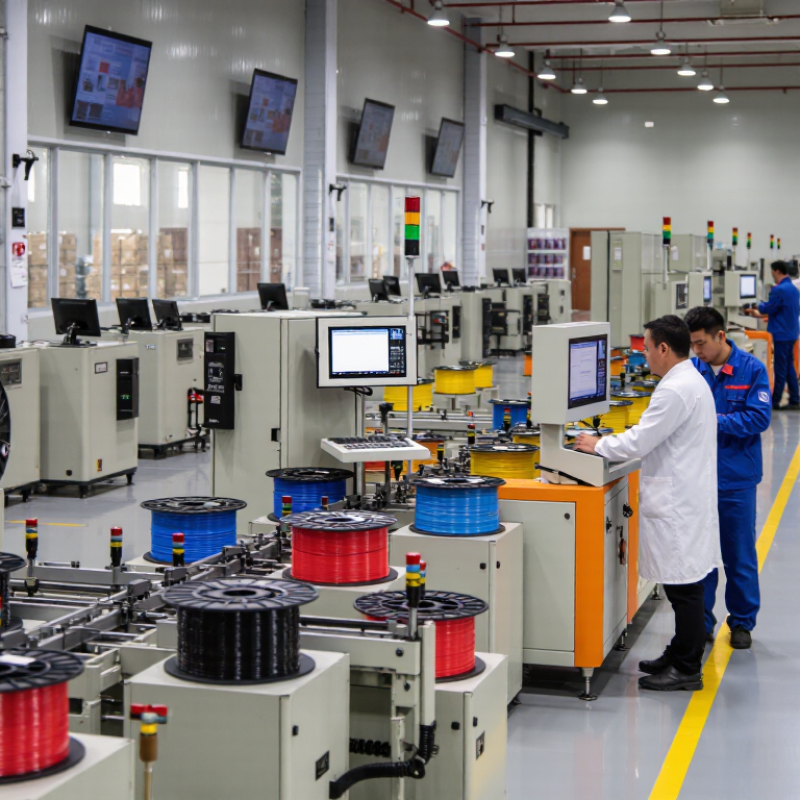
Professional capability appears in documented processes. Look for automotive quality systems, controlled production records, and traceable material batches. A dependable supplier should support sample approval, PPAP documents, and corrective-action reports. Factory engineers should understand vehicle vibration, heat exposure, moisture, and tight routing spaces. Visit the production floor when possible. Observe storage conditions, testing equipment, and operator training. These details often reveal more than a polished presentation.
Reliability also includes communication and delivery discipline. Confirm production capacity, inspection points, packaging methods, and response times before placing an order. Technical questions should receive specific answers with evidence. Still, no supplier is flawless. A missed tolerance or delayed sample can expose weaknesses in planning. The important question is how openly the team investigates the issue and prevents repetition. Honest communication may feel slower, but it protects the wiring system later. A capable supplier welcomes difficult questions, records changes carefully, and keeps engineering decisions visible throughout production.
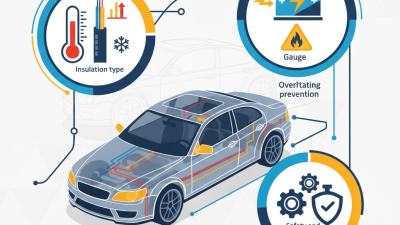
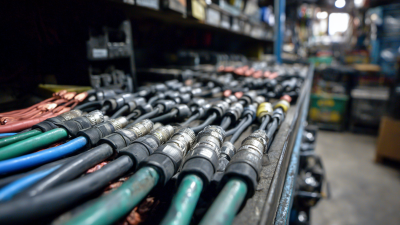
Automotive cable selection begins with the vehicle’s working environment, not a supplier’s catalog. Battery cables carry high current during starting and charging. Their copper cross-section must limit voltage drop and heat. Ignition and sensor cables need stable signals inside crowded engine compartments. Temperature, oil exposure, vibration, and tight bending also matter.
Electric vehicles require high-voltage cables with strong insulation, orange identification, and resistance to abrasion. Shielded cables can reduce electromagnetic interference around inverters and motors. Charging cables face repeated bending, outdoor moisture, and mechanical stress.
Data cables connect cameras, control units, and communication systems, so impedance and signal integrity deserve careful testing. A cable that looks flexible may perform poorly after thousands of bends.
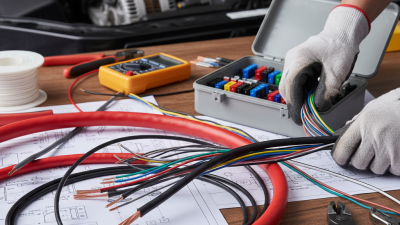
Buyers should ask Chinese suppliers for material specifications, conductor resistance, temperature ratings, bend-test results, and traceable inspection records. Standards such as ISO 6722 can help compare automotive wire performance. Sample testing should include heat aging, flame behavior, vibration, and water exposure. Factory experience matters, but evidence matters more. Request production samples from the intended process, not only attractive display pieces. No checklist is perfect. A design can pass laboratory tests yet fail after poor routing or an undersized connector. Some projects also underestimate assembly time and repair access. Open technical communication, documented changes, and consistent batch control make supplier evaluation more reliable.
A reliable automotive cable supplier should prove quality, not merely promise it. The IEA’s Global EV Outlook 2024 reported nearly 14 million electric car sales in 2023. This growth increases demand for cables that withstand heat, vibration, moisture, and high voltage. Ask for conductor resistance, insulation aging, bend-cycle, flame-retardance, and water-ingress test results. Request results from independent laboratories when possible.
Safety compliance needs practical evidence. Suppliers should understand IATF 16949 quality controls and apply ISO 26262 principles where cables affect functional safety. For high-voltage systems, check testing aligned with UNECE Regulation No. 100. Electromagnetic compatibility also matters under UNECE Regulation No. 10. Traceability should reach the material batch, production shift, and final inspection record. Small details reveal serious discipline.
Do not rely on certificates alone. A supplier can pass an audit and still miss a weak crimp. That gap deserves attention. During evaluation, inspect sample cross-sections, terminal pull-force records, and salt-spray results. Compare test conditions with your vehicle’s real operating environment. The 2023 OICA production report recorded more than 93 million motor vehicles produced worldwide, showing how large the supply chain has become. Yet scale can hide variation. Conduct a pilot order, review nonconformance responses, and repeat testing after production changes. I would also question unusually low quotations; cheaper insulation or copper content may create expensive failures later.
The best automotive cable supplier is not defined by price alone. Manufacturing control matters more when cables face heat, vibration, moisture, and repeated bending. Look for controlled conductor stranding, consistent insulation thickness, and stable terminal crimping. Small variations can create large field problems.
Ask how the supplier manages customization. A capable manufacturer should review drawings, routing space, bend radius, current load, and connector requirements. It should support copper or approved alloy conductors, suitable insulation materials, shielding, braided sleeving, and sealed overmolding. Prototype samples should match production methods, not hand-built shortcuts. That detail matters.
Testing should be visible and repeatable. Useful checks include continuity, resistance, tensile pull, insulation resistance, high-voltage performance, temperature cycling, and water ingress testing. Test records need clear batch numbers and retained samples. Traceability builds trust.
Experience also appears in technical communication. Engineers should explain tolerance limits, suggest manufacturable changes, and identify risks before tooling begins. CAD review and sample approval should be documented. Fast replies are helpful, but accurate replies are better.
No supplier is perfect. Even experienced teams can miss a tight routing constraint or underestimate assembly time. Ask for corrective-action records and evidence of process improvement. A reliable supplier welcomes difficult questions, admits uncertainty, and verifies its claims through controlled testing and consistent production data.
| Evaluation Dimension | What a Capable Supplier Should Offer | Relevant Technical Data or Standard | Recommended Verification Method | Why It Matters |
|---|---|---|---|---|
| Automotive Cable Range | Low-voltage single-core and multi-core cables for power, signal, sensor, lighting, battery, and control applications. | Common conductor cross-sections include approximately 0.13 mm² to 120 mm², depending on the vehicle circuit and current demand. | Review the product catalogue, conductor construction drawings, and application-specific datasheets. | Broad product coverage reduces the need to coordinate multiple cable sources and simplifies harness development. |
| Conductor Material and Construction | Annealed copper conductors with selectable strand counts, compacted constructions, and optional tinned or plated surfaces where required. | Conductor resistance should be specified at a defined reference temperature, commonly 20°C, with the applicable national or international cable standard identified. | Check resistance reports, conductor cross-section, strand diameter, material certificates, and production samples. | Conductor design affects voltage drop, flexibility, crimp performance, heat generation, and long-term reliability. |
| Insulation Material | Material selection matched to temperature, oil, fuel, abrasion, chemicals, flexibility, and flame-performance requirements. | Typical automotive insulation options include PVC, XLPE, TPE, TPU, and halogen-free compounds. Ratings vary by formulation and construction. | Request compound technical data, third-party test results, and validation under the actual fluid and temperature conditions. | Insulation is the primary barrier against short circuits, moisture ingress, mechanical damage, and environmental aging. |
| Temperature Performance | Clearly defined continuous operating temperature, short-term overload capability, and cold-flexibility performance. | Automotive cable temperature classes commonly range from about −40°C to +105°C, +125°C, or +150°C, depending on material and application. | Verify the temperature class on the datasheet and review thermal-aging, cold-bend, and heat-shock test records. | Engine compartments, battery areas, and high-current circuits can expose cables to severe thermal conditions. |
| Voltage and Current Suitability | Design support for conventional low-voltage vehicle systems and, when applicable, higher-voltage battery and power-electronics circuits. | Current-carrying capacity depends on conductor size, insulation temperature rating, ambient temperature, bundling, installation method, and allowable voltage drop. | Ask for derating curves or calculation methods rather than relying on a single universal ampacity value. | Correct electrical sizing prevents excessive temperature rise, energy loss, connector damage, and premature insulation aging. |
| Standards and Compliance | Documented compliance with the standards specified by the vehicle manufacturer, harness designer, or target market. | Relevant references may include ISO 6722 for road-vehicle cables, ISO 19642 for automotive cable assemblies, and applicable national standards. | Confirm the exact edition, test scope, sample construction, and certificate holder; compare them with the requested cable design. | Standards provide a common basis for electrical, mechanical, thermal, and environmental performance evaluation. |
| Customization Capability | Custom conductor sizes, insulation colors, stripe or tracer markings, wall thicknesses, shielding, cable geometry, and cut lengths. | Marking requirements should define color, print content, spacing, contrast, permanence, and traceability information. | Evaluate prototype samples, dimensional inspection reports, print-legibility tests, and engineering change procedures. | Accurate customization helps the cable fit the harness architecture and reduces assembly errors in production. |
| Shielding and EMI Control | Optional foil, braid, spiral, or combined shielding for communication, sensor, inverter, and high-speed signal applications. | Shield performance should be expressed using a defined frequency range, transfer impedance, screening effectiveness, or attenuation method. | Request shielding construction details and laboratory test results using the same termination method as the final harness. | Proper shielding can reduce electromagnetic interference and improve signal integrity in electrically noisy systems. |
| Mechanical Durability | Resistance to abrasion, flexing, vibration, tensile stress, and repeated bending appropriate to the installation location. | Performance depends on conductor stranding, insulation hardness, wall thickness, bend radius, and routing conditions. | Review abrasion, flexing, tensile, elongation, vibration, and bend-radius test results for the proposed construction. | Vehicle vibration and repeated movement can cause conductor fatigue, insulation wear, and intermittent faults. |
| Fluid and Environmental Resistance | Resistance to automotive fluids such as oils, fuels, coolants, cleaning agents, and moisture where applicable. | Fluid compatibility must be tested against the actual exposure temperature, duration, concentration, and fluid type. | Request fluid-immersion test conditions and post-test measurements for tensile strength, elongation, appearance, and insulation resistance. | Fluid exposure can soften, swell, crack, or embrittle insulation and may reduce electrical safety. |
| Production and Process Control | Controlled extrusion, conductor stranding, online diameter or spark testing, batch traceability, and documented quality procedures. | Useful management references include ISO 9001; automotive production programs commonly require IATF 16949 or equivalent customer-specific controls. | Review process flow charts, control plans, inspection records, calibration records, and traceability from raw material to shipment. | Stable processes are more important than a one-time sample because cable performance must remain consistent across large production volumes. |
| Testing and Validation | Routine and type testing covering conductor resistance, insulation resistance, high-voltage withstand, dimensions, aging, and environmental performance. | Test methods and acceptance limits should be tied to the selected cable standard and customer specification. | Request complete test reports with sample identification, equipment information, dates, results, and approval signatures. | Independent and repeatable validation reduces technical risk before the cable enters vehicle or harness production. |
| Prototype and Sampling Support | Fast preparation of engineering samples, first articles, trial lots, and revised samples after design changes. | Sample documentation should include drawing revision, material description, dimensions, electrical values, and production date or lot number. | Measure received samples and compare them with the approved drawing before pilot production. | Responsive sampling allows engineers to identify fit, routing, crimping, and electrical issues early. |
| Supply Capacity and Delivery | Defined monthly capacity, raw-material planning, production lead time, safety-stock options, and contingency arrangements. | Capacity should be stated by cable type, conductor size, production line, and shift pattern rather than as a single overall figure. | Review capacity records, forecast procedures, lead-time history, and business-continuity plans. | Reliable supply is essential when cable is used in scheduled harness or vehicle production. |
| Packaging and Traceability | Packaging that prevents deformation, contamination, moisture damage, and marking loss during storage and transport. | Each reel, coil, or carton should identify part number, construction, length, lot number, production date, and inspection status. | Inspect packaging samples and verify that labels can be linked to the certificate of conformity and production records. | Good traceability supports incoming inspection, inventory control, complaint investigation, and targeted recalls. |
| Technical Communication | Clear drawings, material declarations, engineering change notices, deviation control, and application-specific technical support. | Key documents include specifications, test plans, control plans, certificates of analysis, and change-history records. | Assess the supplier’s response to a sample RFQ, technical clarification, drawing revision, and nonconformance scenario. | Strong technical communication helps prevent specification gaps and shortens the time needed to approve a customized cable. |

The best automotive cable supplier is not always the one offering the lowest unit price. Compare copper grade, insulation thickness, terminal quality, testing, packaging, and tooling charges. A quote that saves three cents may create higher scrap costs later. Ask for a detailed cost sheet. It should separate material, labor, molds, inspection, and shipping. Check whether prices remain valid when copper costs change.
Delivery performance needs more than a promised date. Request a production schedule, sample approval timeline, minimum order quantity, and realistic lead time. Review on-time delivery records for the past six months. Also ask how the supplier handles urgent changes or rejected batches. A small buffer can protect your assembly line. It costs money, but downtime costs more. Sometimes, the shortest quoted lead time is only optimistic.
Support reveals operational maturity. Test response speed before placing a large order. Send technical questions about conductor size, bend radius, temperature resistance, and crimp testing. Clear answers matter. Reliable suppliers provide traceability, inspection reports, corrective-action records, and controlled engineering changes. Certifications such as IATF 16949 can support evaluation, but documents alone cannot prove daily performance. A remote factory audit, sample testing, and a pilot order provide stronger evidence. No scorecard is perfect. My own comparison would still leave room for doubt, especially when communication is smooth but production data is limited.