


7 Lead Wire Buying Tips for Global Buyers?
Global buyers rarely purchase a lead wire by appearance alone. They evaluate conductivity, insulation, flexibility, temperature resistance, traceability, and delivery reliability. A bright copper strand can still fail during crimping or repeated bending. Small details matter.
Market pressure is increasing. The International Energy Agency’s Global EV Outlook 2024 reported nearly 14 million electric cars sold worldwide in 2023. IRENA’s Renewable Capacity Statistics 2024 recorded 473 GW of new renewable capacity during the same year. These figures signal stronger demand for dependable electrical connections across vehicles, inverters, batteries, medical equipment, and industrial controls. They also make supplier selection more difficult.
This guide presents seven practical lead wire buying tips for global procurement teams. It examines conductor materials, wire gauges, insulation systems, operating temperatures, connector compatibility, compliance documents, and quality controls. Buyers should check applicable requirements, including IEC, UL, RoHS, and REACH obligations, before approving samples. A certificate alone is not proof of consistent production. Ask for test methods, batch records, and clear product identification. Price is not proof.
In practice, the cheapest quotation may create higher costs through rejected assemblies, delayed customs clearance, or premature insulation damage. A better evaluation compares total ownership cost, not only the unit price. Some recommendations may need adjustment for harsh environments or specialized equipment. That is worth acknowledging. No universal specification fits every application. The following tips help global buyers ask sharper questions, reduce avoidable risk, and choose lead wire with greater confidence.
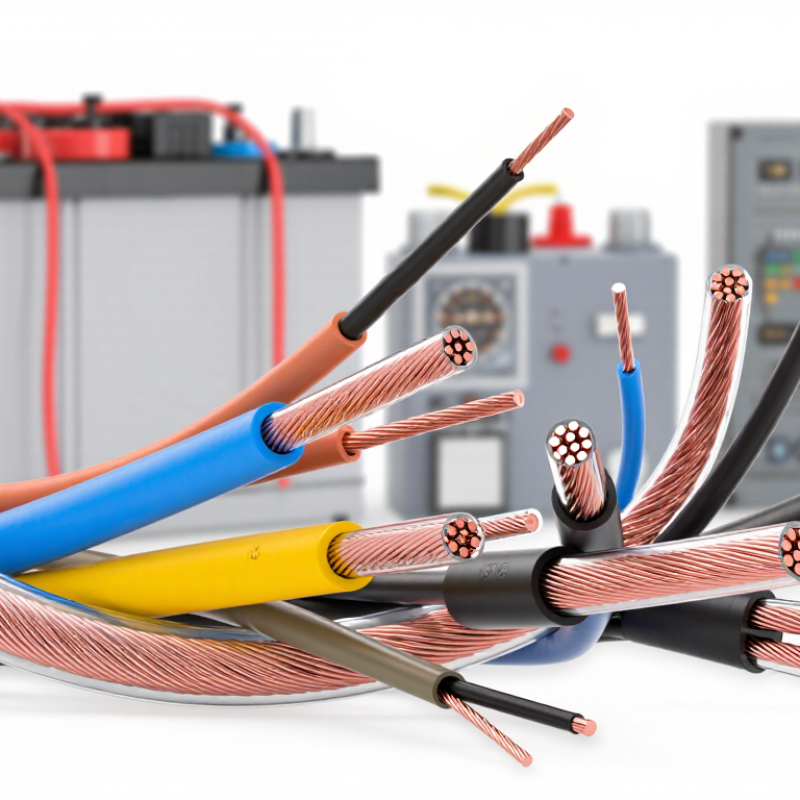
Understand the Application and Electrical Requirements
7 Lead Wire Buying Tips for Global Buyers
Understand the Application and Electrical Requirements
A lead wire should be selected from its working environment, not only its price. Describe the equipment, installation space, movement, and expected service life before requesting quotations. A wire inside a control cabinet faces different demands from one routed through a vibrating machine. Check conductor size against current, voltage, and allowable temperature rise. Confirm whether the circuit carries continuous or intermittent loads. Small details matter.
Tip 1: Build a clear electrical profile. Include nominal voltage, maximum current, frequency, insulation rating, and required length. If the wire connects to sensors, motors, or batteries, identify the connection method and signal sensitivity. Undersized conductors may overheat, while excessive size can create termination problems. I have seen buyers specify only “high-temperature wire,” then discover the insulation was unsuitable for repeated flexing. The wording was too broad.
Tip 2: Match construction to real movement. Ask about bend radius, torsion, abrasion, oil exposure, moisture, and nearby heat sources. Select insulation and jacketing materials for those conditions, then verify terminal compatibility. Request test reports, material details, and traceable production records where appropriate. A sample should be inspected under actual routing conditions, not merely placed on a desk. That step is easy to skip. It is also where many assumptions become visible. Recheck the specification after testing, because the first version is rarely perfect.
| Buying Tip | What to Define | Practical Guidance | Information to Request or Verify |
|---|---|---|---|
| 1. Identify the application | Equipment type, installation location, operating cycle, and whether the wire is fixed or moves during use. | A stationary control-panel connection has different flexibility needs from a lead routed through a repeatedly moving mechanism. | Application description, installation drawing, expected movement, and required service life. |
| 2. Specify current and voltage | Normal operating current, peak or inrush current, circuit voltage, and number of simultaneously loaded conductors. | Conductor size should be selected for the actual load and installation conditions. Allowable current can change with ambient temperature, bundling, and enclosure conditions. | Current and voltage ratings, applicable design standard, and any required derating assumptions. |
| 3. Select conductor material and size | Conductor material, cross-sectional area, strand construction, and acceptable voltage drop. | Copper is commonly used for electrical lead wires. Stranded conductors generally offer more flexibility than solid conductors; compare sizes using the specified standard and units. | Material, nominal cross-sectional area in mm² or AWG, strand configuration, resistance limits, and tolerance requirements. |
| 4. Match insulation to the environment | Temperature exposure, chemicals, oils, moisture, abrasion, and sunlight or UV exposure. | Insulation materials have different temperature and environmental limits. Choose based on the complete operating environment, not temperature alone. | Insulation material, rated temperature range, chemical exposure details, and any flame or environmental test requirements. |
| 5. Check routing and mechanical demands | Minimum bend radius, vibration, tensile loading, abrasion, and repeated flexing. | For dynamic routing, confirm the wire is suitable for the number and type of flex cycles expected. Avoid assuming that a flexible conductor is automatically rated for continuous flexing. | Minimum bend radius, flex-life test method where applicable, vibration conditions, and abrasion protection requirements. |
| 6. Confirm terminations and dimensions | Connection method, terminal or connector compatibility, lead length, strip length, and color coding. | Check that the conductor size and strand construction can be terminated reliably with the specified crimp, solder, or screw connection. | Finished lead length and tolerance, stripping details, terminal requirements, color sequence, and sample approval process. |
| 7. Verify compliance and shipment requirements | Destination-market regulations, required testing, traceability, packaging, and delivery conditions. | Compliance depends on the end product, installation, and target market. Confirm the exact standard and documentation needed before placing an order. | Applicable certifications or test reports, inspection criteria, batch traceability, labeling, packaging, and shipping documentation. |
Related Posts
-

What is Lead Wire and Its Applications in Global Sourcing?
-

How to Choose the Right Welding Cable for Your Projects in 2025
-

2026 Best Control Cable Options for Global Buyers
-

How to Choose the Right Automotive Wire for Your Vehicle?
-
What is a Wire Connector and How Does it Work?
-
2025 Guide to Choosing the Right Wire and Cable for Your Projects